




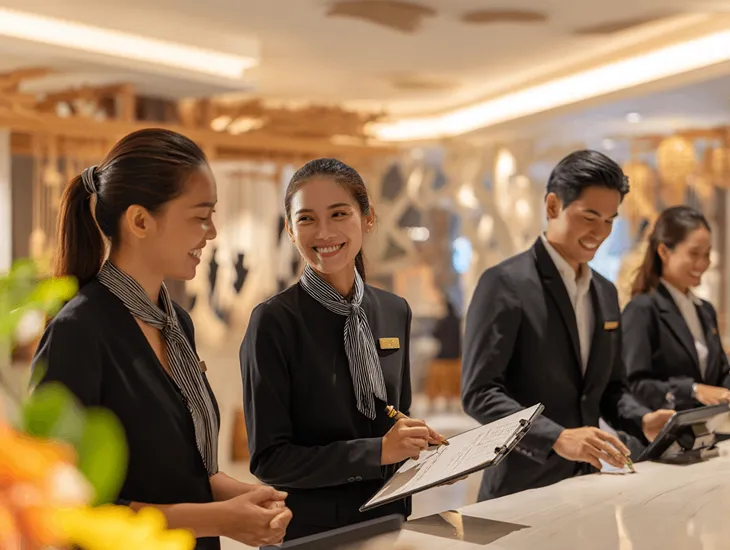
Hospitality grooming standards in Bali shape the first and last impression your guests remember. In 2026, one sloppy appearance can undo hours of training, marketing, and careful service design.
Behind every clean lobby is regulation. Guidance from the Ministry of Tourism and Creative Economy (Kemenparekraf RI) supports hospitality grooming standards in Bali that reflect safety, professionalism, and culture.
Labour and safety rules also influence hospitality grooming standards in Bali. They connect hygiene, uniforms, and footwear with accident prevention, fair workloads, and clear expectations for front and back-of-house teams.
Clear policies on hospitality grooming standards in Bali are easier to apply when HR aligns them with the Ministry of Manpower (Kemnaker RI) approach to decent work, health, and workplace discipline.
Without consistent hospitality grooming standards in Bali, supervisors improvise. What one manager allows, another bans, and staff receive mixed messages on tattoos, piercings, perfume, or acceptable hairstyles at the front desk.
A practical checklist based on hospitality grooming standards in Bali links policy, training, and audits. Combined with health guidance from the Ministry of Health (Kemenkes RI), your team stays guest ready daily.
Table of Contents
- Why grooming standards in Bali hospitality define guest trust
- Core grooming standards in Bali hospitality for daily operations
- Uniform grooming standards in Bali hospitality teams and roles
- Hair, makeup, and accessories grooming rules in Bali hospitality
- Real Story — When grooming standards in Bali hospitality failed
- Body language and etiquette grooming in Bali hospitality teams
- Training to keep grooming standards in Bali hospitality strong
- Future-proof grooming standards in Bali hospitality for 2026
- FAQ’s About hospitality grooming standards in Bali ❓
Why grooming standards in Bali hospitality define guest trust
Hospitality grooming standards in Bali are not just cosmetic rules. They signal whether a hotel, café, or beach club can deliver safe, consistent, and trustworthy service every day.
When hospitality grooming standards in Bali are clear and enforced, guests relax. Clean nails, pressed uniforms, and neutral scents quietly prove that management pays attention to the details.
Poor hospitality grooming standards in Bali create doubt. A stained apron or messy hair makes guests question your food safety, housekeeping, and even the fairness of prices for premium experiences.
Core grooming standards in Bali hospitality for daily operations
Hospitality grooming standards in Bali start with personal hygiene. Daily showers, fresh breath, trimmed nails, and clean hands are non-negotiable basics for anyone working near guests or food.
Next, hospitality grooming standards in Bali require clean, well-fitted uniforms with name tags, closed shoes, and minimal accessories. Staff should look coordinated so guests can find help quickly.
Finally, hospitality grooming standards in Bali extend to timekeeping and readiness. Staff should arrive dressed, pressed, and device-free, ready to serve rather than adjusting outfits in guest areas.
Uniform grooming standards in Bali hospitality teams and roles
Hospitality grooming standards in Bali treat uniforms as mobile branding. Colours, fabrics, and cuts should match your concept while still being practical for climate, movement, and cleaning routines.
To support hospitality grooming standards in Bali, set rules for name tags, shoes, and layers. Avoid mixed logos or random T-shirts that confuse guests about who is staff and who is a promoter.
Hospitality grooming standards in Bali also cover laundry and repair. Assign responsibility for washing, replacing buttons, and removing stains so no one appears in faded, torn, or mismatched items.

Hair, makeup, and accessories grooming rules in Bali hospitality
Hospitality grooming standards in Bali must address hair, makeup, and accessories. Long hair should be tied back, colours kept natural, and styles chosen for hygiene as well as brand fit.
Clear hospitality grooming standards in Bali limit heavy makeup, noisy jewelry, and large accessories. The focus stays on guest comfort and safety, not on personal fashion experiments during service hours.
With written hospitality grooming standards in Bali, managers avoid awkward one-off comments. Instead, they can refer to agreed examples and photos when coaching staff before each shift.
Real Story — When grooming standards in Bali hospitality failed
Hospitality grooming standards in Bali looked optional to one Seminyak café. Staff chose their own outfits, tattoos were uncovered, and standards shifted with every new supervisor on the rota.
As hospitality grooming standards in Bali slipped, reviews mentioned dirty sneakers and stained aprons. Guests began to doubt food hygiene and felt the prices no longer matched the visible effort.
When revenue fell, the owner finally documented hospitality grooming standards in Bali, issued uniforms, and trained supervisors. Within months, ratings improved and staff turnover slowed noticeably.
Body language and etiquette grooming in Bali hospitality teams
Hospitality grooming standards in Bali also cover posture, tone, and eye contact. A crisp uniform loses power when staff slouch, avoid guests, or huddle on phones at the host stand.
Consistent hospitality grooming standards in Bali include simple etiquette rules. Staff greet guests within seconds, make eye contact, and avoid strong gestures, chewing gum, or private jokes in public spaces.
When leaders model hospitality grooming standards in Bali, teams copy them. Daily briefings, role-play, and quick feedback loops keep body language aligned with the calm, confident image you promise online.
Training to keep grooming standards in Bali hospitality strong
Hospitality grooming standards in Bali will only last if training is regular. New hires need onboarding, while existing staff benefit from refreshers tied to real guest feedback and mystery visits.
Build hospitality grooming standards in Bali into checklists and performance reviews. Supervisors should know how to coach appearance issues respectfully, not just send people home in frustration.
By linking hospitality grooming standards in Bali to incentives and recognition, you show they are part of success. Teams then see grooming as a professional skill, not an arbitrary rule.
Future-proof grooming standards in Bali hospitality for 2026
Hospitality grooming standards in Bali will keep evolving with guest expectations. Sustainability, inclusivity, and local culture now influence how tattoos, hairstyles, and modesty are interpreted.
Review hospitality grooming standards in Bali each year with HR and marketing. Align them with brand photos, hiring markets, and any new health regulations affecting uniforms or protective equipment.
Documented hospitality grooming standards in Bali help you adapt calmly when trends shift. Instead of rewriting rules in a crisis, you update a living policy that already covers core principles.
FAQ’s About hospitality grooming standards in Bali ❓
-
What are hospitality grooming standards in Bali in simple terms?
They are written rules on hygiene, uniforms, hair, makeup, fragrance, and body language. Their goal is to protect guests, staff, and your brand reputation in one consistent framework.
-
How strict should grooming rules be for a casual beach bar?
Casual concepts can still use clear grooming standards. The style may be relaxed, but expectations on cleanliness, tidy hair, and respectful outfits should be as firm as in any city hotel.
-
Can we allow visible tattoos under hospitality grooming standards in Bali?
Yes, if your brand and guest mix accept them. Focus on content, placement, and hygiene. Make the rules explicit so there is no confusion between departments or shifts.
-
How often should we review our grooming policy?
Review at least once a year, or sooner if new uniforms, roles, or regulations arrive. Use feedback from guests and staff to adjust examples, photos, and training material.
-
Who should own hospitality grooming standards in Bali inside the business?
Ideally HR and operations share ownership. HR drafts and updates the policy, while supervisors apply it daily and report issues or exceptions back into the review process.


