





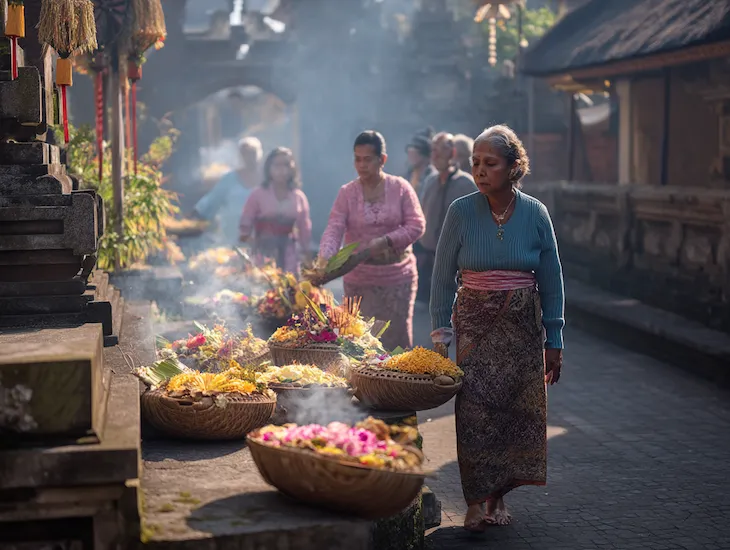



Balinese cultural etiquette can feel invisible until you break it. Small actions, like where you point your feet or how you walk past offerings, can shape how welcome you feel on the island.
To understand Balinese cultural etiquette better, start with the values in the official Wonderful Indonesia tourism guide, which highlights harmony between people, nature, and the divine.
Balinese cultural etiquette shows up most clearly in temples, family compounds, and village events. Rules may vary by place, but respect, modesty, and patience are always safe choices when you are unsure.
Tourism has changed daily life, yet Balinese cultural etiquette still follows religious law and community decisions. The Ministry of Tourism and Creative Economy of Indonesia continues to promote respectful, community-based tourism.
Balinese cultural etiquette also overlaps with religion. Ceremonies, offerings, and prayer times deserve quiet attention. Guidance from the Ministry of Religious Affairs of the Republic of Indonesia helps explain why certain spaces and days are sacred.
By learning these rules of Balinese cultural etiquette before you arrive, you avoid offense, build trust with neighbours, and show that you see Bali as more than a holiday backdrop.
Table of Contents
- Why Balinese Cultural Etiquette Matters for Foreign Guests
- Dress and Temple Etiquette in Balinese Cultural Etiquette
- Balinese Cultural Etiquette for Offerings, Shrines and Canang
- Respectful Behaviour in Balinese Ceremonies and Processions
- Real Story — Learning Balinese Cultural Etiquette the Hard Way
- Balinese Cultural Etiquette for Homes, Banjar and Villages
- Silence, Sacred Places and Balinese Cultural Etiquette Rules
- Social Media, Business Conduct and Balinese Cultural Etiquette
- FAQ’s About Balinese Cultural Etiquette for Foreigners ❓
Why Balinese Cultural Etiquette Matters for Foreign Guests
Balinese cultural etiquette is the bridge between being a tourist and being a welcome guest. Locals notice how you dress, speak, and move in shared spaces, especially in villages and temple areas away from main streets.
Balinese cultural etiquette is not about perfection. People understand you are learning. What matters is your attitude: asking politely, copying respectful behaviour, and accepting corrections with gratitude, not defensiveness.
Dress and Temple Etiquette in Balinese Cultural Etiquette
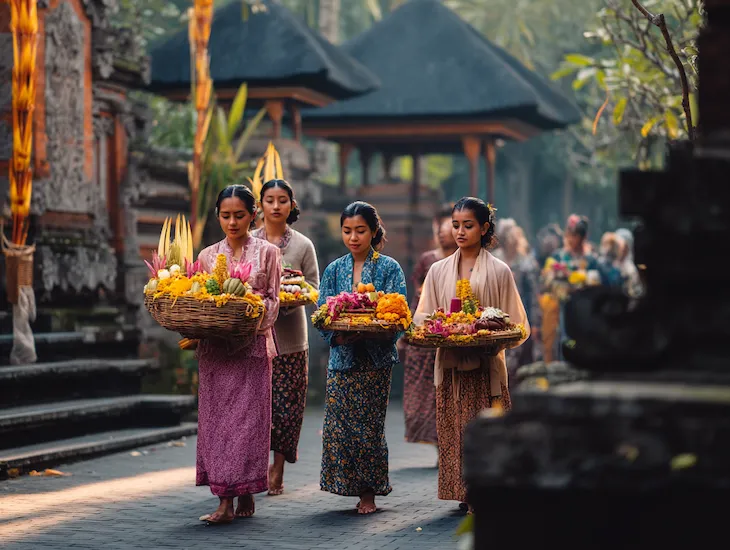
Balinese cultural etiquette in temples begins with how you dress. Cover shoulders, avoid short shorts, and use a sarong and sash when entering sacred areas, even if you are only watching a ceremony from a distance.
Balinese cultural etiquette also asks you to move slowly, avoid blocking worshippers, and never climb on shrines for photos. Women on their period are traditionally asked not to enter inner temple areas; if unsure, quietly ask a local woman.
Balinese Cultural Etiquette for Offerings, Shrines and Canang
Balinese cultural etiquette treats offerings as living prayers. Never step on canang, kick them aside, or move them without permission, even if they are in the street. Walk around slowly or choose another path if you can.
Balinese cultural etiquette also means not treating shrines as decoration. Do not rest drinks on them or pose with cigarettes in front of altars. If a dog or scooter has disturbed an offering, leave it alone unless the owner asks for help.
Respectful Behaviour in Balinese Ceremonies and Processions
Balinese cultural etiquette during ceremonies is simple: the event is not about you. Stand to the side, lower than the priest where possible, and avoid blocking the view of family members taking part in ritual moments.
Balinese cultural etiquette around processions includes stopping your scooter or car and letting the group pass. Turn music down, avoid honking, and do not squeeze through the line. Photos are possible, but ask first when you are close.
Real Story — Learning Balinese Cultural Etiquette the Hard Way
Balinese cultural etiquette caught “Tom”, a new expat, by surprise. He parked his scooter near a village temple, sat on a wall, and snapped photos during a cremation ceremony, assuming it was a public event like a parade.
Local elders later told Tom his position and behaviour were disrespectful. He apologised, brought offerings, and asked how to act next time. That talk became his first real lesson in Balinese cultural etiquette and community expectations.
Over time, Tom learned that Balinese cultural etiquette is best learned from neighbours, not just from blogs. Offering help, listening more than speaking, and admitting mistakes turned an awkward start into real relationships.
Balinese Cultural Etiquette for Homes, Banjar and Villages

Balinese cultural etiquette in homes starts at the gate. Call out, wait to be invited in, and remove shoes if you see others barefoot. Sit where you are shown, not on shrines or raised platforms meant for offerings or elders.
Balinese cultural etiquette in the banjar means respecting community decisions. Loud parties, parking habits, and building work are often discussed collectively. Ignoring invitations, fines, or schedules can damage trust quickly.
Silence, Sacred Places and Balinese Cultural Etiquette Rules
Balinese cultural etiquette values silence at the right times. During prayers, Nyepi, or moments when bells and chanting begin, lower your voice, put phones away, and pause conversations or music until the ritual passes.
Balinese cultural etiquette also applies to sacred natural places like springs or certain trees. Follow posted signs, wear modest clothing even at “hidden” spots, and avoid shouting, smoking, or playing loud music nearby.
Social Media, Business Conduct and Balinese Cultural Etiquette
Balinese cultural etiquette now extends online. Posting revealing or mocking photos in temples, or turning ceremonies into content, can offend communities and attract official attention or complaints.
Balinese cultural etiquette in business means fair treatment of staff, neighbours, and partners. Paying on time, keeping noise under control, and involving the banjar in major changes show you value community, not just profit.
FAQ’s About Balinese Cultural Etiquette for Foreigners ❓
-
Is Balinese cultural etiquette the same everywhere on the island?
No. Balinese cultural etiquette varies by village and family. Core values repeat, but details can differ, so follow local guidance when invited somewhere new.
-
Do I have to be Hindu to follow Balinese cultural etiquette?
No. Balinese cultural etiquette is about respect, not conversion. You can dress modestly, act calmly, and honour ceremonies while keeping your own beliefs.
-
Is it rude to say no to temple or ceremony invitations?
Not always. Balinese cultural etiquette allows gentle refusal if you are unwell or busy. Thank the host, explain briefly, and show interest in future events.
-
Can I bring children to ceremonies under Balinese cultural etiquette rules?
Yes, if they are dressed modestly and behave calmly. Balinese cultural etiquette for children expects quiet curiosity, not running or climbing on sacred areas.
-
What should I do if I realise I broke a rule of Balinese cultural etiquette?
Apologise sincerely, accept feedback, and ask what is appropriate next time. Simple humility often repairs small mistakes quickly.
-
How can I learn more about Balinese cultural etiquette in my village?
Speak with neighbours, your landlord, or banjar leaders. Listening, asking politely, and joining community events are the best teachers of Balinese cultural etiquette.


