Close
  • English
Bali Visa
  • Visa Services
    • Visitor Visa
      • Visa On Arrival (E-VOA)
      • Single Entry Visa for Tourism C1
      • Single Entry Visa for Business C2
      • Multiple Entry Tourist Visitor Visa D1
      • Multiple Entry Business Visitor Visa D2
      • Multiple Entry Pre-Investment Visa D12
      • Pre-Investment Visa C12
      • C22 Internship Visa
      • EPO (Exit Permit Only)
    • Visa Extension
      • Visa On Arrival (E-VOA)
      • Single Entry Visa for Tourism C1
      • Single Entry Visa for Business C2
      • Pre-Investment Multiple Entry Visa D12
    • KITAS(longer stay visa)
      • Pre-Investment Visa C12
      • Investment KITAS E28A
      • Working KITAS
      • Retirement KITAS – E33F
      • Silver Hair Retirement KITAS – E33E
      • Digital Nomad KITAS E33G
      • Family Dependent KITAS
      • Spouse KITAS
      • Child KITAS
      • Parent KITAS
      • Sibling KITAS
      • Student KITAS E30A
      • Second Home KITAS E33
      • Golden Visa Indonesia
      • KITAP (Permanent Stay Permit)
      • Work Permit Indonesia
  • Company Establishment
    • Foreign Investment Company (PMA)
    • Local Investment Company (PMDN)
  • Legal Service
    • Open Bank Account
    • Driver’s License
    • Residency Certificate (SKTT)
    • Police Clearance Certificate (SKCK)
    • LKPM Report
    • Tax Report
  • Blog
  • Virtual Office
  • Contact
Appointment
Logo
Appointment
Logo
  • Berawa No.6, Canggu
  • info@balivisa.co
  • Mon - Fri : 10:00 to 17:00
    Bali Visa > Blog > Activity > Bali’s Sacred Trilogy: Melasti, Pengerupukan, and Nyepi explained
Bali’s Sacred Trilogy 2026 – Melasti, Pengerupukan, Nyepi rituals
December 4, 2025

Bali’s Sacred Trilogy: Melasti, Pengerupukan, and Nyepi explained

  • By KARINA
  • Activity, Travel

Melasti, Pengerupukan, and Nyepi arrive each Caka New Year like three linked waves, reshaping daily life in Bali for several days in a row. For visitors, residents, and villa owners, this Bali’s Sacred Trilogy can feel magical, confusing, and even disruptive if you don’t understand what is really happening or how to behave respectfully.

At its heart, the trilogy is a carefully ordered journey: purification through water (Melasti), fierce confrontation with negative forces (Pengerupukan), and finally complete stillness on Nyepi. You can see this sequence described in official explanations of Nyepi and its preparatory rituals from the Ministry of Tourism and Creative Economy on their Nyepi celebration overview. These three moments are not separate festivals; they are one continuous spiritual reset for the island.

The silence of Nyepi itself is strongly protected. Bali’s provincial tourism portal explains how flights stop, roads empty, lights dim, and even entertainment systems are turned off during the Day of Silence, turning the island into a vast, shared retreat from noise and distraction on the official Nyepi event page. For newcomers, that means you cannot move around freely or run your business as usual, even if you are not Hindu.

At the same time, the Bali’s Sacred Trilogy offers profound opportunities if you plan ahead. You can witness Melasti processions walking from inland temples to the sea, hear the drums and see ogoh-ogoh giants on Pengerupukan, then experience a full 24 hours of collective silence on Nyepi without feeling lost. Indonesia’s national tourism portal even shares common questions visitors ask about Nyepi, including what is allowed in hotels and private villas, in its official Nyepi FAQ for visitors. This guide uses that spirit of clear, respectful guidance to help you move through the trilogy with confidence 🌙.

Table of Contents

  • Bali’s Sacred Trilogy overview of Melasti, Pengerupukan, Nyepi 🌅
  • Bali’s Sacred Trilogy and its roots in Balinese Hindu philosophy 📚
  • Key rules for Bali’s Sacred Trilogy rituals for visitors and locals 🧾
  • Planning your trip around Bali’s Sacred Trilogy ceremonies wisely ✈️
  • Experiencing Bali’s Sacred Trilogy rituals respectfully as a guest 🙏
  • Real Story — first-time Nyepi in Bali’s Sacred Trilogy journey 📖
  • Common mistakes during Bali’s Sacred Trilogy and how to avoid them ⚠️
  • Future of Bali’s Sacred Trilogy celebrations and tourism balance 🔮
  • FAQ’s About Bali’s Sacred Trilogy for respectful visitors ❓

Bali’s Sacred Trilogy overview of Melasti, Pengerupukan, Nyepi 🌅

The Bali’s Sacred Trilogy describes three connected rituals wrapped around Balinese Hindu New Year: Melasti, Pengerupukan, and Nyepi. Melasti is a grand purification, when temple communities carry sacred objects and offerings to the sea, lake, or springs to cleanse them and symbolically wash away spiritual impurities. The atmosphere is bright and communal, with white and yellow clothing, umbrellas, music, and a flow of offerings toward the water.

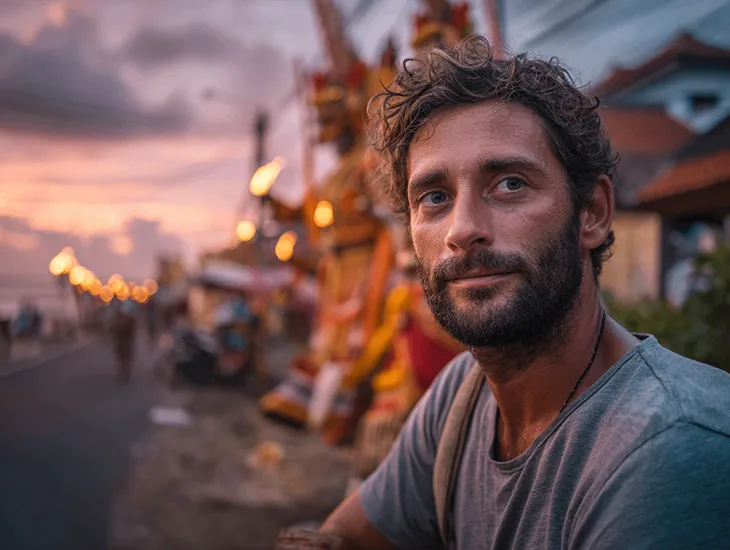
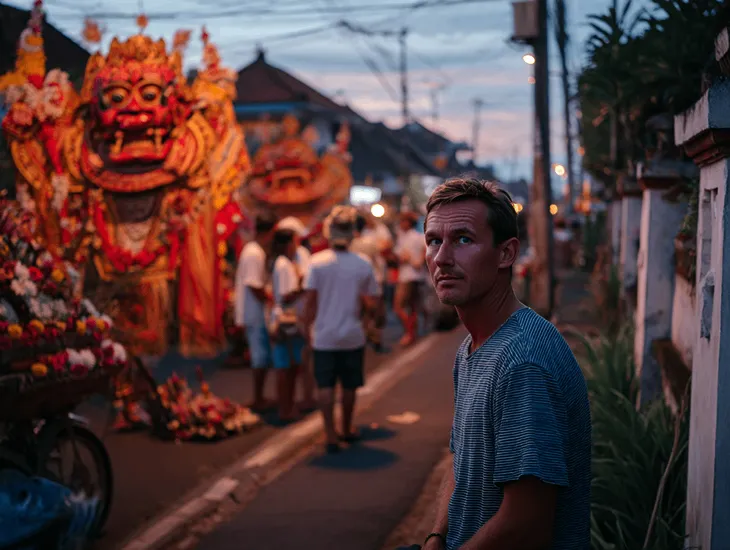
Within a day or two, the trilogy moves into Pengerupukan, a louder and more chaotic moment. Families and banjar communities create ogoh-ogoh—giant demonic effigies carried through the streets—accompanied by drums, torches, and noise meant to scare away negative forces. The Bali’s Sacred Trilogy uses this night to externalise fear and chaos, before discarding or burning the effigies in a final, symbolic release.

Nyepi follows as a sharp contrast: a full Day of Silence guided by Catur Brata Penyepian—no fire, no work, no travel, and no worldly entertainment. On this day, the island retreats inward; streets empty, airports close, and even lights are dimmed. For 24 hours, the Bali’s Sacred Trilogy asks everyone on the island, including non-Hindus, to cooperate with silence, reflection, and darkness so that Bali can start the new year cleansed, quiet, and balanced again 🌙.

Bali’s Sacred Trilogy and its roots in Balinese Hindu philosophy 📚

Bali’s Sacred Trilogy 2026 – purification, balance, and inner silence

The Bali’s Sacred Trilogy is more than a calendar of events; it is a living expression of Balinese Hindu philosophy. One of the most important concepts is Tri Hita Karana—the “three causes of well-being”: harmony with the divine, harmony among humans, and harmony with nature. Melasti, Pengerupukan, and Nyepi weave these three harmonies together by involving temples, communities, and the natural world in one coordinated ritual arc 🌿.

Melasti focuses strongly on harmony with nature and the divine, taking sacred objects and offerings to the sea or water sources that sustain life. Pengerupukan, with its crowded streets and noisy ogoh-ogoh parades, is more about the human realm: acknowledging that society carries fear, anger, and disorder, and confronting those energies directly. The Bali’s Sacred Trilogy then culminates in Nyepi, when the whole island practises harmony through silence, staying home, pausing work, and letting both people and nature rest.

Underneath the spectacle, the trilogy also reflects the Balinese Hindu calendar and ideas about cosmic balance. Nyepi marks the Caka New Year, and the days leading up to it are carefully structured to prepare both the seen (sekala) and unseen (niskala) worlds. For locals, this is not “just a holiday” but a serious commitment to resetting spiritual and social equilibrium; for visitors, understanding this helps you see that the Bali’s Sacred Trilogy is a gift to be respected, not just photographed 📚.

Key rules for Bali’s Sacred Trilogy rituals for visitors and locals 🧾

The Bali’s Sacred Trilogy has practical rules that affect everyone, not only temple members. During Melasti, roads toward beaches or lakes may close or slow down, and authorities give priority to processions over normal traffic. Visitors are welcome to watch, but they must stay out of the path, dress modestly, and avoid stepping over offerings or blocking people carrying sacred objects. This is a time to move gently, observe quietly, and let the ceremony flow around you.

On Pengerupukan, noise is suddenly encouraged. Families bang on objects, children light (permitted) firecrackers, and ogoh-ogoh are carried around intersections and village halls. The Bali’s Sacred Trilogy expects visitors to respect local safety rules during this chaos: don’t touch the effigies, don’t climb on structures for photos, and keep an eye on children near open flames or crowded streets. Alcohol-fuelled behaviour can quickly turn disrespectful here, especially when people are already excited by the spectacle.

Nyepi carries the strictest rules. Movement is restricted; you stay inside your home or accommodation, lights are kept low, and noise is minimised. The Bali’s Sacred Trilogy is legally supported on this day by village and security structures such as pecalang, who patrol to ensure silence and darkness are maintained. For non-Hindus and tourists, this means planning for food, water, medications, and internet limitations in advance, so you can honour the silence without stress 🧾.

Planning your trip around Bali’s Sacred Trilogy ceremonies wisely ✈️

When you plan a trip around the Bali’s Sacred Trilogy, timing is everything. Nyepi always falls around March according to the Balinese Caka calendar, but the exact dates of Melasti and Pengerupukan vary by village and temple. If you’re booking flights, it is wise to arrive a few days before Pengerupukan and remain on the island until at least a day after Nyepi, since airports and most transport will completely stop during the Day of Silence.

Accommodation choices also matter. If you stay in a hotel or large resort, staff usually prepare Nyepi briefings, special menus, and quiet in-house activities. In villas or homestays, your host may explain local rules but expect you to manage your own supplies. Aligning your plans with the Bali’s Sacred Trilogy means stocking up on essentials before Nyepi, downloading offline entertainment, and accepting that some facilities like pools or gyms might run on limited hours or subdued lighting ✨.

For business owners and retreat hosts, planning around the Bali’s Sacred Trilogy requires even more foresight. You may need to adjust retreat schedules, reset check-in/check-out dates, and prepare guests psychologically for a day without movement or external services. Done well, this can be a highlight: designing meditation, journaling, or silent yoga programs that turn Nyepi into a powerful retreat centrepiece rather than a “lost” day of operations.

Experiencing Bali’s Sacred Trilogy rituals respectfully as a guest 🙏

Experiencing the Bali’s Sacred Trilogy as a guest is a privilege, but it also comes with responsibilities. On Melasti, you might feel tempted to walk into ceremonial lines for the perfect sunset shot; instead, ask your guide or a local where you can stand. Use a sarong and scarf, keep shoulders and knees covered, and remember that the ceremony is for worship, not entertainment. A smile, a small bow, and giving space often speak louder than any words 🙏.

During Pengerupukan, the atmosphere can feel like a street festival: music, crowds, and dramatic ogoh-ogoh figures swirling through intersections. Respect for the Bali’s Sacred Trilogy means remembering that these effigies represent forces being confronted and expelled, not theme-park mascots. Avoid climbing on them, pulling at decorations, or pushing through carriers for a selfie. If you photograph, do so from the side, and pause if priests or community members seem focused on a particular ritual moment.

Nyepi invites you to practise stillness alongside the island. Many visitors describe it as one of the most memorable days of their time in Bali: the sky grows darker without city lights, stars become visible, and the usual traffic noise disappears. To honour the Bali’s Sacred Trilogy, keep curtains closed at night so light doesn’t leak outside, lower your voice, and avoid loud digital entertainment. The more you embrace the silence, the more you feel why Bali guards this day so carefully 🌙.

Real Story — first-time Nyepi in Bali’s Sacred Trilogy journey 📖

Bali’s Sacred Trilogy 2026 – visitor journey, reflection, silence

When Alex, a remote worker from Germany, booked a long stay in Canggu, he had only vaguely heard about Nyepi. The phrase Bali’s Sacred Trilogy meant nothing to him; he just noticed that his landlord mentioned “no going out” for one day in March. He booked his flight to arrive the evening before Pengerupukan without realising that his timing dropped him straight into one of the busiest ceremonial periods of the year 📖.

On his first morning, Alex woke to see a Melasti procession moving toward the beach: hundreds of people in white, umbrellas, priests, gamelan music, all flowing past his guesthouse. Curious, he followed at a distance and watched the purification at the shoreline. Later that day, his host explained that this was the first part of the Bali’s Sacred Trilogy, cleansing sacred objects and symbolically washing away negativity before the new year. That conversation shifted his view from “random parade” to “carefully choreographed spiritual reset”.

The next night, Pengerupukan changed everything again. Ogoh-ogoh giants towered above the streets, carried by chanting youth, drums beating loudly. Alex almost stepped onto the road for a close-up photo, but a neighbour gently pulled him back and showed where to stand. He realised that respecting the Bali’s Sacred Trilogy meant letting locals lead while he observed, not inserting himself into the centre. After the effigies were burned, the neighbourhood felt strangely lighter and quieter.

On Nyepi, Alex stayed alone in his room with pre-bought food, a notebook, and downloaded playlists set low. At first he felt restless, but as the hours passed, the silence outside became calming rather than restrictive. Without scooters or music, he noticed birds, wind, and his own thoughts more clearly. When lights went low at night and the sky filled with stars, he understood why the Bali’s Sacred Trilogy ends in absolute stillness: it gives the island, and everyone on it, a chance to reset together. After that experience, he planned future visits around Nyepi on purpose, not by accident.

Common mistakes during Bali’s Sacred Trilogy and how to avoid them ⚠️

A common mistake with the Bali’s Sacred Trilogy is treating the ceremonies as exotic entertainment rather than sacred practice. Guests who cut through processions, sit on temple walls for photos, or handle offerings casually can cause deep offence, even if they don’t mean to. The simple rule is: if locals treat a space, object, or moment with obvious respect, you should mirror that behaviour, stay slightly back, and ask before interacting.

Another frequent problem is ignoring practical restrictions. Some visitors arrive on Nyepi itself expecting to check in, shop, or drive around as usual, not realising that airports close and shops shut. When the Bali’s Sacred Trilogy reaches Nyepi, logistics change completely: no food deliveries, no normal transport, and limited hotel services. Failing to plan for this leads to stress, arguments with staff, and a poor experience for everyone involved.

The last big mistake is turning Pengerupukan into a party night. While there is noise and celebration, alcohol and careless behaviour can quickly cross lines, especially around ogoh-ogoh parades and fire. Respecting the Bali’s Sacred Trilogy means knowing when to participate joyfully and when to step back—letting community leaders decide the mood and direction of the night. Doing so keeps you safe, keeps the atmosphere uplifting, and protects the meaning of the ceremony for those who live it every year ⚠️.

Future of Bali’s Sacred Trilogy celebrations and tourism balance 🔮

The Bali’s Sacred Trilogy is evolving as Bali balances tradition with global tourism. Local and national authorities have become more proactive in publishing guidelines, explaining Nyepi restrictions clearly, and encouraging visitors to plan trips around the Day of Silence instead of fighting it. Hotels and retreat centres are also reframing Nyepi as a unique wellness opportunity, designing silent programs rather than treating it as an inconvenient shutdown.

At the same time, communities are debating how to protect authenticity. There are discussions about ogoh-ogoh competitions, visitor viewing zones, and how to limit commercialisation of sacred imagery. The Bali’s Sacred Trilogy will likely remain firmly in community hands, but coordination with tourism stakeholders is growing so that guests understand expectations in advance and businesses know how to brief them. The goal is to keep rituals spiritually strong while still welcoming respectful visitors.

Looking toward 2026 and beyond, the most sustainable path is mutual adaptation. Visitors and foreign residents can adjust schedules, expectations, and behaviour to align with Melasti, Pengerupukan, and Nyepi; authorities can keep improving communication and signage in multiple languages. If both sides move in that direction, the Bali’s Sacred Trilogy will continue to be one of the island’s most powerful cultural experiences, not just for locals, but for anyone lucky enough to share those days of water, fire, and silence 🔮.

FAQ’s About Bali’s Sacred Trilogy for respectful visitors ❓

  • What exactly is Bali’s Sacred Trilogy?

    Bali’s Sacred Trilogy refers to the sequence of Melasti, Pengerupukan, and Nyepi around Balinese Hindu New Year—purification, exorcism, and a Day of Silence that reset spiritual and social balance.

  • Can non-Hindus join Melasti or Pengerupukan?

    Visitors are welcome to observe and, in some cases, join from the edges if invited, but they should never stand in ceremonial lines, touch sacred objects, or block processions. Respectful distance is key during the Bali’s Sacred Trilogy.

  • What happens if I travel to Bali on Nyepi?

    On the Nyepi day within the Bali’s Sacred Trilogy, airports and ports close, roads are empty, and you must stay inside your accommodation with limited lights and noise. It is still possible to arrive before or after, but not during the 24-hour silence.

  • Are restaurants and shops open during Bali’s Sacred Trilogy?

    Around Melasti and Pengerupukan, many businesses operate with adjusted hours, but on Nyepi itself nearly all shops and restaurants close. Some hotels provide in-house meals, yet you should not expect normal service during the Bali’s Sacred Trilogy silence.

  • Is Nyepi unsafe or uncomfortable for tourists?

    Nyepi is usually calm and safe; the main challenge is psychological. With good preparation—food, water, quiet activities—most visitors find the Bali’s Sacred Trilogy silence deeply peaceful and memorable.

  • How can I best prepare my family for Bali’s Sacred Trilogy?

    Explain to children that these are sacred days with special rules, plan screen-based entertainment at low volume, and choose accommodation where staff are used to guiding families through the Bali’s Sacred Trilogy period.

Need help planning Bali’s Sacred Trilogy experience? Chat with us on WhatsApp for tips ✨

Chat on WhatsApp Chat on WhatsApp
  • Category:
  • Activity, Travel
  • Share:
KARINA

A Journalistic Communication graduate from the University of Indonesia, she loves turning complex tax topics into clear, engaging stories for readers. Love cats and dogs.

Categories

  • Company Establishment
  • Legal Services
  • Visa Services
  • Travel
  • Tax Services
  • Business Consulting

Recent Posts

IMEI Registration in Indonesia 2026 – customs rules, device taxes, and safe network access
Staying Connected: IMEI Registration in Indonesia Made Easy
December 4, 2025
Demystifying Building Permits in Bali 2026 – legal basics, zoning, compliance
Demystifying Building Permits in Bali for Safer Investments
December 4, 2025
Closing a PT PMA in Indonesia 2026 – legal steps, tax clearance, OSS updates
Closing a PT PMA in Indonesia Without Tax or Legal Headaches
December 4, 2025
u3449978488_An_office_setting_with_two_people_sitting_at_a_w (2) (1)
  • Any Questions? Call us

    +62 853 3806 5570

  • Any Questions? Email us

    info@balivisa.co

Free Online Assessment

    logo-white

    Bali Visa service сompany is
    your trusted partner in Indonesia,
    catering to your individual needs
    and providing a seamless and easy solution to all your travel needs.

    Important links
    • Visa Service
    • Company Establishment
    • Legal Services
    • Blog
    Support
    • Privacy Policy
    • Refund Policy
    • About Us
    • Contact
    Find Us Here

    Permana virtual office, Ganidha residence, Jl. Gunung Salak ruko no.1, Padangsambian Klod, Kec. Denpasar ,Bali -PT PERMANA GROUP

    Mon/Fri 10:00 – 17:00

    +62 853 3806 5570

    Get Directions

    (©) 2025 Bali Visa Services company. All rights reserved.

    • Home
    • About Us
    • Contact Us