




Close
  • English
Bali Visa
  • Visa Services
    • Visitor Visa
      • Visa On Arrival (E-VOA)
      • Single Entry Visa for Tourism C1
      • Single Entry Visa for Business C2
      • Multiple Entry Tourist Visitor Visa D1
      • Multiple Entry Business Visitor Visa D2
      • Multiple Entry Pre-Investment Visa D12
      • Pre-Investment Visa C12
      • C22 Internship Visa
      • EPO (Exit Permit Only)
    • Visa Extension
      • Visa On Arrival (E-VOA)
      • Single Entry Visa for Tourism C1
      • Single Entry Visa for Business C2
      • Pre-Investment Multiple Entry Visa D12
    • KITAS(longer stay visa)
      • Pre-Investment Visa C12
      • Investment KITAS E28A
      • Working KITAS
      • Retirement KITAS – E33F
      • Silver Hair Retirement KITAS – E33E
      • Digital Nomad KITAS E33G
      • Family Dependent KITAS
      • Spouse KITAS
      • Child KITAS
      • Parent KITAS
      • Sibling KITAS
      • Student KITAS E30A
      • Second Home KITAS E33
      • Golden Visa Indonesia
      • KITAP (Permanent Stay Permit)
      • Work Permit Indonesia
  • Company Establishment
    • Foreign Investment Company (PMA)
    • Local Investment Company (PMDN)
  • Legal Service
    • Open Bank Account
    • Driver’s License
    • Residency Certificate (SKTT)
    • Police Clearance Certificate (SKCK)
    • LKPM Report
    • Tax Report
  • Blog
  • Virtual Office
  • Contact
Appointment
Logo
Appointment
Logo
  • Berawa No.6, Canggu
  • info@balivisa.co
  • Mon - Fri : 10:00 to 17:00
    Bali Visa > Blog > Activity > Banjar in Bali: What Foreigners Must Know to Live Respectfully and Avoid Issues
Banjar in Bali 2025 – community roles, cultural responsibilities for foreigners, and respectful long-stay integration practices
November 25, 2025

Banjar in Bali: What Foreigners Must Know to Live Respectfully and Avoid Issues

  • By KARINA
  • Activity, Travel

Understanding the Banjar in Bali is essential for foreigners who want to live harmoniously, whether they stay long-term for work, lifestyle, or cultural exploration 🌿. The Banjar is more than a neighborhood—it’s a local community council that preserves culture, ensures safety, and nurtures social connection. According to the Directorate General of Immigration, foreigners living in Bali are expected to follow community norms in addition to national regulations 🌍.

The Banjar influences daily life through ceremonies, community dues, neighborhood expectations, and traditional values 💡. Even though foreigners are not obligated to join religious rituals, respecting cultural rhythms—like processions, temple activities, and ceremony schedules—helps avoid misunderstandings. The Ministry of Tourism & Creative Economy highlights that meaningful integration leads to a more fulfilling Bali experience, especially for digital nomads and expats seeking cultural depth ✨.

Living peacefully with the Banjar brings real benefits, such as safer neighborhoods, faster conflict resolution, and easier access to local information 💛. For villa owners, tenants, and long-stay residents, staying updated with Banjar announcements—including fees, ceremonies, and environmental rules—builds strong relationships with neighbors. The Provincial Government of Bali reminds that cultural harmony is part of the island’s identity, and foreigners who embrace Banjar life contribute positively to community wellbeing 📌.

Table of Contents

  • Why the Banjar in Bali exists and its core role for communities 🌍
  • How the Banjar in Bali influences daily life for foreign residents 🏡
  • How foreigners can integrate respectfully with the Banjar in Bali ✨
  • Real Story — how learning about the Banjar in Bali changed one expat’s life ❤️
  • How villas, hotels, and tourism businesses interact with the Banjar in Bali 🌴
  • Banjar in Bali fees, community duties, and ceremony participation expectations ⚙️
  • Common mistakes foreigners make with the Banjar in Bali and how to avoid issues ⚠️
  • What to expect when the Banjar in Bali calls for meetings, contributions, or mediation 📌
  • FAQ’s about the Banjar in Bali ❓

Why the Banjar in Bali exists and its core role for communities 🌍

The Banjar in Bali is a traditional community structure that plays a vital role in managing local life and preserving cultural identity 🌿. Every village is divided into smaller Banjar units to maintain social order, ceremonies, and mutual support between households. It ensures that temple activities, cultural celebrations, and community safety run smoothly through collective responsibility 💡. 

Even though Banjar is not a government body, its influence in daily life is strong because it represents the voice of the community rather than laws alone. For foreigners living in Bali, understanding Banjar structure helps create appreciation for Balinese values beyond tourism 🌴. It remains a symbol of solidarity, unity, and cultural resilience that shapes the island’s identity ✨.

How the Banjar in Bali influences daily life for foreign residents 🏡

Banjar in Bali — cultural expectations for foreigners, community dues and ceremony schedules, respectful integration for long-stay expats

Foreigners living in Bali naturally interact with the Banjar in Bali through neighborhood activities, announcements, cultural customs, and contributions such as community fees 🌿. The Banjar helps coordinate ceremonies and processions, so certain roads may close temporarily, music may play later at night, or public spaces might be reserved for rituals 💡. 

Communication from Banjar leaders provides clarity on expectations, such as noise limits, rubbish disposal, and security contributions. Respecting these expectations helps maintain harmony within the community 🌴. As stated in Section 1, Banjar systems are not meant to restrict foreigners but to preserve culture while ensuring everyone feels safe and welcome ✨.
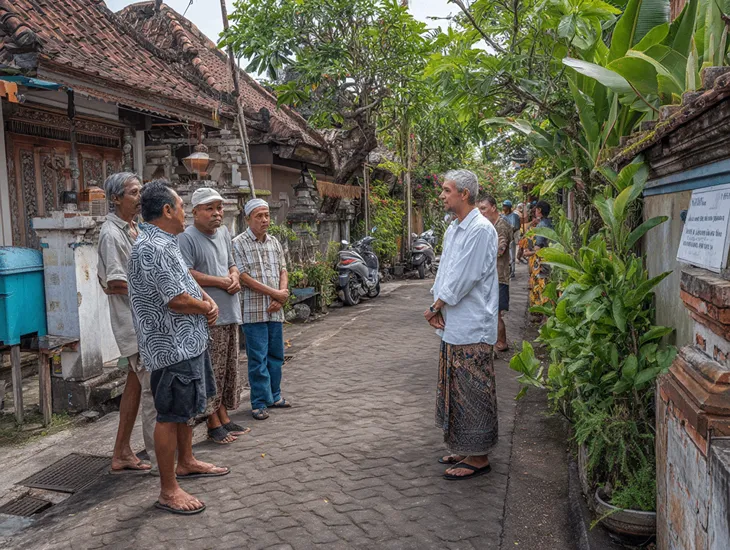
How foreigners can integrate respectfully with the Banjar in Bali ✨

Foreigners can integrate successfully with the Banjar in Bali by embracing small gestures of respect 🌿. Greeting neighbors, asking before organising events, and learning basic ceremony schedules make daily life easier and friendlier. It is not mandatory for foreigners to join religious rituals, but recognizing their importance shows appreciation for Balinese traditions 💡. 

When Banjar leaders share announcements, responding politely and following instructions builds trust and strengthens relationships. The Banjar also values participation in community cleanup days, education events, and special gatherings 🌴. 

Positive cultural interest creates a supportive environment where foreigners feel part of the neighborhood rather than guests passing through ✨.

Real Story — how learning about the Banjar in Bali changed one expat’s life ❤️

When Daniel, a 34-year-old designer from Spain, moved to Canggu, he loved Bali’s lifestyle but felt disconnected from real community life 🌿. He rented a villa inside a peaceful neighborhood, unaware that a ceremony was coming up. One morning he was surprised to find the street closed and music echoing through the area. Instead of complaining, he approached a neighbor who explained that the Banjar was preparing for a temple celebration 💡. 

Daniel apologized for not understanding and asked how he could respect the process. The neighbor introduced him to the Banjar leader, who welcomed him warmly and shared ceremony dates and community guidelines. Daniel attended a cleanup event the following week and contributed a small donation for security. Slowly, conversations at cafés turned into invitations to gatherings, and he felt a deeper sense of belonging 🌴. 

He didn’t change his religion or culture — he simply respected the community and allowed friendships to grow. Today, he says that understanding the Banjar transformed Bali from a place he visited to a place he considers home ✨.

How villas, hotels, and tourism businesses interact with the Banjar in Bali 🌴

Tourism operators rely on the Banjar in Bali to maintain peaceful and organized environments in their neighborhoods 🌿. Villas, coliving spaces, event venues, yoga studios, and wedding organizers often coordinate with Banjar leaders for security arrangements, crowd control, and cultural scheduling. Community contributions help support public facilities, ceremonial flow, and safety during large gatherings 💡. 

Businesses that communicate openly with the Banjar enjoy smoother operations and fewer misunderstandings with neighbors. Collaboration also improves guest experience, as visitors learn cultural awareness while still enjoying hospitality services 🌴. When Banjar and businesses cooperate, the results benefit both culture and commerce ✨.

Banjar in Bali fees, community duties, and ceremony participation expectations ⚙️

Banjar in Bali 2025 — community fees, environmental duties, and ceremony etiquette for long-stay residents and villa tenants

The Banjar system includes contributions that support community welfare and temple activities 🌿. These may include routine community fees, emergency support funds, and maintenance for public facilities. Environmental duties are equally important — keeping the area clean, managing waste properly, and following guidelines for pets or construction 💡. 

Ceremony participation does not require foreigners to perform rituals but encourages awareness of temporary changes in daily life, such as street closures or sound levels. Respect and involvement, even in small ways, foster communication and prevent avoidable issues 🌴. As explained in Section 2, Banjar expectations are not burdensome — they help everyone enjoy a peaceful shared environment ✨.

Common mistakes foreigners make with the Banjar in Bali and how to avoid issues ⚠️

A common misunderstanding about the Banjar in Bali is assuming that rules don’t apply to foreigners 🌿. Problems usually arise when residents ignore announcements, refuse community contributions, or disrupt ceremonies with loud gatherings or illegal parking. Another issue occurs when villa tenants or guests are unaware of Banjar expectations because owners fail to communicate 💡. 

Simple solutions prevent major conflicts: learning ceremony schedules, asking before hosting big events, and responding politely to Banjar communication. Little gestures of respect go a long way 🌴. Foreigners who respect the Banjar rarely encounter problems — instead, they gain community support and reliable neighborhood relationships ✨.

What to expect when the Banjar in Bali calls for meetings, contributions, or mediation 📌

Banjar meetings and announcements help maintain fairness and safety within the neighborhood 🌿. When the Banjar calls for a meeting, foreigners are not expected to join rituals — only to listen respectfully and follow practical guidelines. Calls for community contributions fund local security, ceremonial activities, and public facilities 💡. 

If mediation is needed, Banjar leaders act as community moderators to resolve issues respectfully before they escalate. Clear communication helps prevent cultural misunderstandings and encourages a harmonious living environment 🌴. With patience and openness, foreigners experience Bali not as outsiders but as welcomed neighbors ✨.

FAQ’s about the Banjar in Bali ❓

  • What is the purpose of the Banjar?

    To maintain cultural traditions, community welfare, and social harmony.

  • Do foreigners have to join religious ceremonies?

    No — but respecting schedules and temporary adjustments is important.

  • Are community fees mandatory?

    Yes for residents and business operators; fees support neighborhood safety and temple activities.

  • Can the Banjar stop events like weddings or parties?

    They can regulate events to protect cultural harmony and neighborhood peace.

  • Do I need to speak Balinese or Indonesian?

    Not required — respect and clear communication matter more.

Need guidance about the Banjar in Bali? Message us on WhatsApp for clear and friendly help ✨

Chat on WhatsApp Chat on WhatsApp
  • Category:
  • Activity, Travel
  • Share:
KARINA

A Journalistic Communication graduate from the University of Indonesia, she loves turning complex tax topics into clear, engaging stories for readers. Love cats and dogs.

Categories

  • Company Establishment
  • Legal Services
  • Visa Services
  • Travel
  • Tax Services
  • Business Consulting

Recent Posts

Indonesian personal income tax declaration 2026 – SPT Tahunan, DJP Online, and deadlines
Indonesian Personal Income Tax Declaration
December 3, 2025
Immigration and visas for Bali 2026 – entry options, key requirements, and safer long stays
Immigration and Visas for Bali: understanding real Bali visa requirements
December 3, 2025
Hospitality Tax Payment Obligations in Bali 2026 – hotel and restaurant levies, PBJT, and local compliance
Managing Hospitality Tax in Bali for Fully Compliant Hotels
December 3, 2025
u3449978488_An_office_setting_with_two_people_sitting_at_a_w (2) (1)
  • Any Questions? Call us

    +62 853 3806 5570

  • Any Questions? Email us

    info@balivisa.co

Free Online Assessment

    logo-white

    Bali Visa service сompany is
    your trusted partner in Indonesia,
    catering to your individual needs
    and providing a seamless and easy solution to all your travel needs.

    Important links
    • Visa Service
    • Company Establishment
    • Legal Services
    • Blog
    Support
    • Privacy Policy
    • Refund Policy
    • About Us
    • Contact
    Find Us Here

    Permana virtual office, Ganidha residence, Jl. Gunung Salak ruko no.1, Padangsambian Klod, Kec. Denpasar ,Bali -PT PERMANA GROUP

    Mon/Fri 10:00 – 17:00

    +62 853 3806 5570

    Get Directions

    (©) 2025 Bali Visa Services company. All rights reserved.

    • Home
    • About Us
    • Contact Us
