



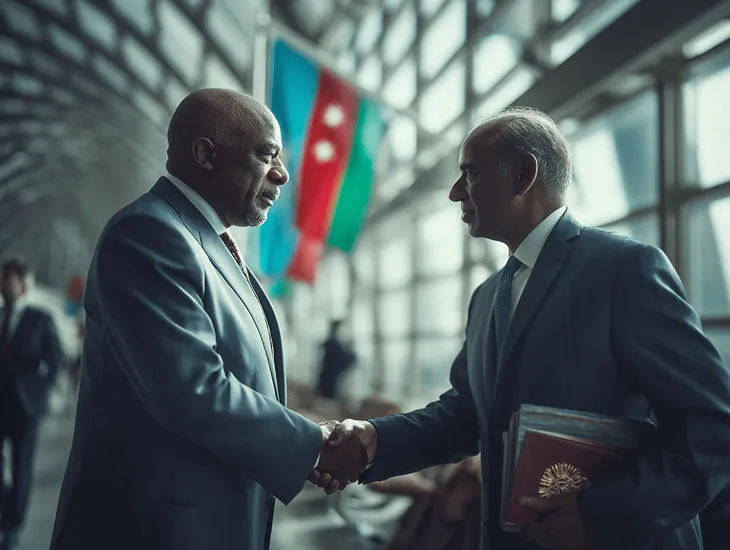

When two countries scrap visas for each other’s envoys, it signals more than a faster queue at the airport. The new visa-free for diplomats arrangement between Indonesia and Azerbaijan turns what used to be a paperwork-heavy process into a routine, short-stay privilege, making it easier for ambassadors, attachés, and senior officials to move quickly between Jakarta and Baku when diplomacy needs them most 😊. Under this regime, holders of diplomatic and service passports can enter the partner country without securing a visa in advance, as long as they meet the conditions laid out in the agreement and normal border rules. You can see the broader context in Indonesia’s diplomatic and service visa guidelines.
This step is not happening in isolation. It builds on a long-standing legal foundation in Indonesia for mutual visa exemption arrangements with partner states, including Azerbaijan, and reflects a regional pattern where diplomatic passports receive special facilitation as a sign of trust and reciprocity. The practical message is simple: when officials need to attend urgent talks, observe elections, or support citizens abroad, visas should not be the bottleneck. Instead, the focus shifts to the substance of cooperation and the quality of bilateral dialogue.
Indonesia has steadily enlarged its network of mutual visa exemption partners for holders of diplomatic and service passports, and Azerbaijan is among the states now clearly inside that circle. A brochure from Indonesia’s foreign ministry lists more than a hundred such partner countries, showing how central visa-free for diplomats has become in the country’s foreign policy toolkit. That pattern is reflected in agreements covering Europe, Asia, the Middle East, and Africa, as captured in the official Indonesian visa exemption partners list.
From Baku’s point of view, the regime is equally strategic. Azerbaijan has emphasised links between the visa-free deal and cooperation in sectors such as the economy, transport, tourism, and multilateral coordination, including climate diplomacy and the work of the Non-Aligned Movement. The country’s broader visa policy for foreigners still applies to ordinary passport holders, but diplomats and service-passport holders now have a dedicated lane under this bilateral exemption. For those travellers, it complements existing rules and guidance from Azerbaijan’s official visa information for diplomats and gives a clearer pathway for frequent official visits 🌍.
Table of Contents
- Indonesia Azerbaijan visa-free for diplomats: what changed and why 🧾
- Legal basis of Indonesia Azerbaijan visa-free for diplomats 📜
- How the Indonesia Azerbaijan visa-free for diplomats regime works in practice 💼
- Scope and limits of Indonesia Azerbaijan visa-free for diplomats travel 🧳
- Strategic benefits of Indonesia Azerbaijan visa-free for diplomats 🌐
- Real Story — using Indonesia Azerbaijan visa-free for diplomats on mission 📖
- Common mistakes with Indonesia Azerbaijan visa-free for diplomats ⚠️
- Future outlook for Indonesia Azerbaijan visa-free for diplomats and beyond 🔍
- FAQ’s About visa-free for diplomats between Indonesia and Azerbaijan ❓
Indonesia Azerbaijan visa-free for diplomats: what changed and why 🧾
The new Indonesia Azerbaijan visa-free for diplomats arrangement turns what used to be a formal visa application into a simple right of short-term entry for those holding diplomatic and service passports. Instead of applying at an embassy or consulate for each visit, eligible officials can now travel under a standing understanding between the two governments, subject to usual passport and security checks. This gives foreign ministries and line agencies far more flexibility when planning visits, negotiations, and working-level missions 🙂.
Politically, visa-free for diplomats is a visible symbol of trust. It tells the world that Indonesia and Azerbaijan expect regular, constructive contact at senior levels and do not want bureaucracy to slow that down. It sits alongside cooperation in energy, infrastructure, education, and multilateral forums, where both states already work together and seek to expand their roles. For officials planning the next working group or ministerial meeting, the agreement is less a headline and more a quiet enabler in the background.
Legal basis of Indonesia Azerbaijan visa-free for diplomats 📜
Behind the new visa-free for diplomats regime is a concrete legal backbone. Indonesia adopted a Presidential Regulation that approves a mutual visa exemption arrangement with Azerbaijan for holders of diplomatic and service passports, reflecting an agreement first concluded between the two governments. (BPHN) Over time, this has been reinforced by subsequent understandings and the practical implementation steps taken by both sides.
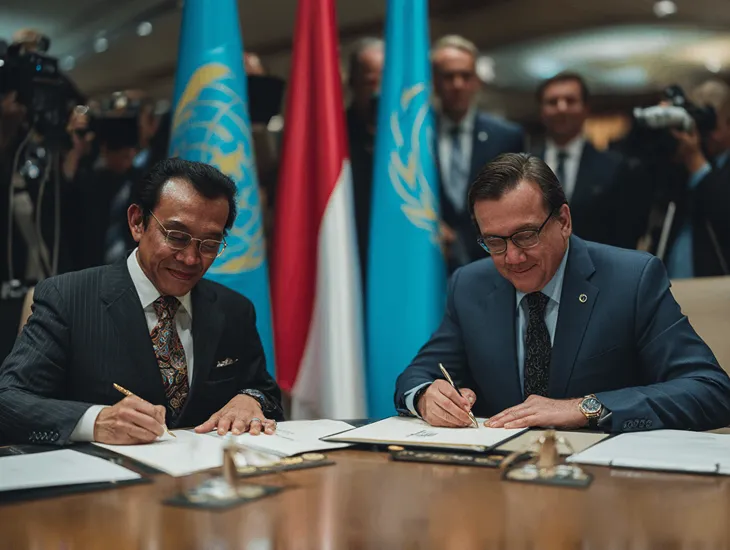
On the Azerbaijani side, the foreign ministers of Indonesia and Azerbaijan signed a bilateral agreement establishing visa-free travel for diplomatic and service passport holders during a meeting held alongside the UN General Assembly in New York. (Azertag) Later, Azerbaijan’s parliament ratified the agreement, confirming the legal authority for its officials to enjoy and extend reciprocal treatment to Indonesian counterparts. (Azertag) This sequence—signature followed by ratification—shows the seriousness both states attach to the change.
For practitioners, the key takeaway is that visa-free for diplomats is grounded in formal international agreement, not just a political statement. That means border officials, airline staff, and protocol officers have a clear legal reference when they see an Indonesian or Azerbaijani diplomatic or service passport at check-in or immigration. It also means that any misuse, such as travelling for purposes outside the agreed scope, can be treated as a breach of both domestic and international rules.
How the Indonesia Azerbaijan visa-free for diplomats regime works in practice 💼
In day-to-day terms, Indonesia Azerbaijan visa-free for diplomats means that eligible passport holders can enter the partner country without a visa sticker or e-visa, for short-term official stays. They still present their diplomatic or service passport at the border, explain the purpose of their visit, and may be asked for supporting notes or verbal confirmation from their embassy or sending ministry, but they do not go through a prior visa application process. The exact permitted length of stay and conditions are spelled out in the agreement itself and must be respected. (wccj5.mkri.id)
Most official travellers will follow a similar workflow. Before departure, the sending ministry or agency issues a travel order or assignment letter, and protocol or HR staff check that the passport type matches the trip. At the airport, check-in staff inspect the passport to confirm it is diplomatic or service, not ordinary. On arrival, immigration officers verify that the passport is genuine, the holder is not on any restriction lists, and the visit fits within the scope of visa-free for diplomats—typically official duties, conferences, negotiations, or multilateral meetings 💼.
Internally, ministries on both sides should update their travel guidelines and briefing notes. Mission planners need to be clear that visa-free for diplomats simplifies entry but does not override other obligations, such as accreditation rules, security clearance procedures, or host-country notification requirements for certain activities. By standardising this guidance, governments can ensure that every department uses the regime correctly and consistently.
Scope and limits of Indonesia Azerbaijan visa-free for diplomats travel 🧳
Even with visa-free for diplomats, the regime has clear boundaries. It applies to diplomatic and service passport holders travelling on official business, not to ordinary passport holders planning tourism, private visits, or commercial work outside inter-governmental frameworks. Those travellers remain subject to each country’s general visa policy for ordinary citizens and should not assume that the diplomatic waiver applies to them. (BNPB)
Within its scope, Indonesia Azerbaijan visa-free for diplomats normally covers short-term stays, giving enough time for meetings, conferences, or consultations, but not for long-term residence or full-time assignments that require formal accreditation. Diplomats posted for extended periods still follow standard diplomatic accreditation channels and residence procedures, separate from short-stay, visa-free arrangements. Overstaying the permitted period under a visa-free regime can still create compliance problems, even for officials 🧳.
Another limit is purpose. Using a diplomatic or service passport for activities outside an official mandate—such as private business, side jobs, or tourism unrelated to the mission—risks undermining trust and may breach both domestic rules and the spirit of the agreement. Governments are expected to police their own use of the privilege, instructing staff to keep travel under visa-free for diplomats aligned with documented official tasks. Good record-keeping, including trip reports and clear mission orders, helps demonstrate that discipline if questions arise later.
Strategic benefits of Indonesia Azerbaijan visa-free for diplomats 🌐
The Indonesia Azerbaijan visa-free for diplomats decision sits within a broader strategy of strengthening political and economic ties. By removing a layer of red tape for official travellers, both governments make it easier to send missions focused on energy, transport, infrastructure, education, and tourism promotion—sectors already highlighted in bilateral discussions. (Azertag) Faster, more flexible visits can help convert high-level political goodwill into concrete projects and agreements.
Multilaterally, the arrangement supports coordination in platforms where both states are active, such as the UN, the Non-Aligned Movement, and the wider Islamic cooperation framework. Delegations can move more quickly to attend urgent consultations, special sessions, or negotiation rounds, without having to wait for case-by-case visa issuance. This is particularly relevant in fields like climate diplomacy, where Azerbaijan has taken on major hosting responsibilities and Indonesia is a significant voice 🌐. (Xalqqazeti.az)
There is also a soft-power dimension. When diplomats travel smoothly, they can spend their time building relationships with counterparts, business communities, academia, and cultural actors rather than standing in consular queues. That deeper network of people-to-people ties is often what sustains a relationship during more difficult moments. In the long run, the visa-free for diplomats regime can contribute quietly to more resilient, diversified links between the two countries.
Real Story — using Indonesia Azerbaijan visa-free for diplomats on mission 📖
Sari, a mid-career Indonesian diplomat posted in Jakarta, was tasked with coordinating a series of energy and infrastructure consultations in Baku. In the past, every trip to Azerbaijan required her to submit a visa request, wait for approval, and then adjust flight bookings around processing times. With the new Indonesia Azerbaijan visa-free for diplomats regime in place, her ministry’s protocol office simply checked her diplomatic passport, issued a travel order, and confirmed that the visit fell within the agreement’s scope.
Because she no longer needed to wait for a visa sticker, Sari’s team could schedule the mission around the dates that best suited both governments and key companies involved in the talks. On arrival, immigration officers verified her diplomatic passport, asked a few routine questions about the purpose and duration of the visit, and stamped her in under the visa-free for diplomats arrangement. The whole process took minutes, not weeks 📖.
The real benefit emerged later. As negotiations progressed, both sides realised they needed a follow-up round sooner than expected, plus a technical visit to Indonesian facilities for Azerbaijani experts. Thanks to the mutual regime, planning those back-and-forth trips was straightforward: each side focused on substance, securing meeting rooms and site visits instead of worrying about whether visas would be ready in time. Sari’s ministry updated its internal guidelines to capture the experience, turning a one-off success into a repeatable model for future Indonesia Azerbaijan visa-free for diplomats missions.
Common mistakes with Indonesia Azerbaijan visa-free for diplomats ⚠️
Even helpful changes like visa-free for diplomats can create confusion if they are not explained clearly. One common mistake is assuming the regime applies to everyone from Indonesia and Azerbaijan, regardless of passport type. Ordinary passport holders sometimes hear about diplomatic visa exemptions and wrongly think they can also travel without a visa. Clarifying that the arrangement is limited to diplomatic and service passports prevents disappointment at the airport. (BNPB)
Another risk is poor internal coordination. If HR, protocol, and line departments are not aligned, officials might be booked to travel on short notice without the correct passport or documentation. In extreme cases, someone might hold a service passport but travel for private reasons, which can raise questions at the border and damage trust between states. Clear written rules, staff training, and pre-travel checklists are simple tools to avoid these pitfalls ⚠️.
Finally, some institutions fail to record how they use Indonesia Azerbaijan visa-free for diplomats. Without basic data—who travelled, for what mission, and under which legal basis—it becomes harder to defend the programme if external auditors or parliamentary committees ask how the privilege is being managed. Simple reporting templates and post-mission notes can show that the regime is being used responsibly and tied directly to measurable cooperation outcomes.
Future outlook for Indonesia Azerbaijan visa-free for diplomats and beyond 🔍
Looking ahead, Indonesia Azerbaijan visa-free for diplomats is likely to become a stable feature of the bilateral relationship, much like similar regimes Indonesia maintains with many other partner states for diplomatic and service passports. (Kemlu) Over time, the focus will move from celebrating the agreement itself to maximising the practical benefits it creates in trade, investment, education, and cultural exchanges.
In parallel, both countries are refining their broader visa frameworks and digital systems for ordinary travellers, including tourists, students, and business people. While those changes are separate from visa-free for diplomats, they are part of the same story: making mobility easier without compromising security or migration management. Indonesia’s growing list of diplomatic visa-exemption partners and Azerbaijan’s own visa modernisation efforts suggest that structured, rule-based facilitation will remain a priority 🔍. (Wikipedia)
For now, the most important task is implementation. That means updating official manuals, keeping front-line staff informed, and monitoring how Indonesia Azerbaijan visa-free for diplomats is used in real missions. If both sides treat feedback seriously and adjust procedures where needed, the regime can evolve smoothly and inspire similar arrangements in other regions and partnerships.
FAQ’s About visa-free for diplomats between Indonesia and Azerbaijan ❓
-
Who exactly benefits from Indonesia Azerbaijan visa-free for diplomats?
The regime applies to holders of diplomatic and service (official) passports from Indonesia and Azerbaijan, travelling on official duties consistent with the bilateral agreement. Ordinary passport holders still follow the usual visa rules.
-
Does visa-free for diplomats mean unlimited stay?
No. The agreement sets a specific maximum duration per visit, designed for short-term official missions rather than long-term residence. Travellers must leave or adjust their status before that limit is reached.
-
Are diplomats completely exempt from border checks under this regime?
No. Immigration officers in both countries still verify passports, security concerns, and the stated purpose of travel. Visa-free for diplomats removes the visa requirement but does not remove normal entry controls.
-
Can family members use Indonesia Azerbaijan visa-free for diplomats too?
Family members who hold their own diplomatic or service passports and accompany an official mission may be covered, depending on the agreement and each country’s practice. Family using ordinary passports normally follow standard visa rules.
-
Does this change anything for business travellers or tourists?
Not directly. Indonesia Azerbaijan visa-free for diplomats focuses on official travellers. Business people and tourists should continue to check the standard visa and entry requirements applicable to their passport type and purpose of visit.
-
Could the visa-free for diplomats regime be suspended?
As with any international agreement, either side can revisit or suspend elements if security, health, or political circumstances change. However, such moves are usually exceptional and would normally be communicated through diplomatic channels.


