

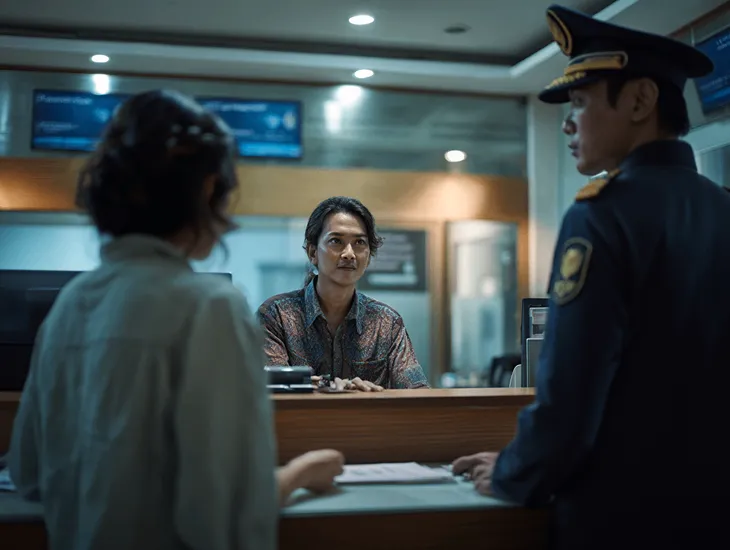
Biometric requirements for visa extensions have quietly become one of the most important rules for anyone staying longer in Indonesia. What used to be a routine “paper” extension is now a structured process where you must appear in person to be photographed, fingerprinted, and briefly interviewed at an immigration office. The Directorate General of Immigration now treats these checks as a core part of how it monitors foreigners across the archipelago.
Under this new framework, the old idea that an agent can “handle everything without you showing up” is no longer safe. Even when your application starts online, immigration expects your physical presence to complete biometric capture before your extension is final. These rules sit on top of the legal framework overseen by the Ministry of Law and Human Rights, which connects stay permits, border records, and the national immigration database.
For tourists, digital nomads, and long-term residents on ITAS or ITK, biometric requirements for visa extensions mean more predictability but also less room for shortcuts. Officers can verify that the person applying for an extension is the same person who entered Indonesia, living at the stated address, and using the right visa category. In coastal hubs like Bali, Lombok, and Jakarta, these checks are now standard rather than exceptional.
This guide explains what biometric requirements for visa extensions really involve in 2026, who must comply, and how to prepare so that appointments are smooth instead of stressful. It also explores how biometric data supports immigration oversight, what happens if you skip or delay your visit, and what future regional trends may look like as Southeast Asia rolls out more digital-plus-biometric border systems. By the end, you will know how to align your travel plans with these rules and when to seek help from professionals or your nearest Ministry of Foreign Affairs of Indonesia mission abroad 🙂
Table of Contents
- Why biometric requirements for visa extensions in Indonesia matter 🧾
- Core biometric requirements for visa extensions in Indonesia 📚
- Visa extension process under biometric requirements in Indonesia 🧩
- How biometric requirements for visa extensions tighten oversight 💻
- Risks and safeguards of biometric requirements for visa extensions 💰
- Real Story — Biometric requirements for visa extensions in Bali 📖
- Common mistakes with biometric requirements for visa extensions ⚠️
- Future of biometric requirements for visa extensions and e-systems 🚀
- FAQ’s About biometric requirements for visa extensions ❓
Why biometric requirements for visa extensions in Indonesia matter 🧾
Biometric requirements for visa extensions in Indonesia mark a shift from paper-based trust to verifiable in-person checks. Instead of relying only on documents, immigration officers now match your face, fingerprints, and digital records before granting more time in the country. For the authorities, this is about reducing overstays, identifying misuse of visas, and making sure stay permits reflect reality on the ground.
For foreigners, these biometric requirements for visa extensions mean that renewals are more serious than a casual stamp. You must plan time to attend the immigration office linked to your registered address, dress appropriately, and be ready to answer simple questions about your activities and exit plans. In busy offices around Bali, Jakarta, and other hubs, this extra step can be the difference between a smooth extension and a last-minute scramble.
The upside is that once biometric requirements for visa extensions are understood and respected, the system becomes more predictable. You know that once your appointment is complete and your data is confirmed, your stay permit is anchored to a clear, verified record. That reliability supports future applications too, because officers can see a consistent history of compliant entries, extensions, and departures 🧾
Core biometric requirements for visa extensions in Indonesia 📚
At the core of biometric requirements for visa extensions in Indonesia are three simple but mandatory elements: a digital photo, fingerprint scans, and a short face-to-face interaction with immigration staff. For most visitors and residents, this applies whether you are extending a short-term visit visa, a visa on arrival, or a longer ITAS/ITK stay permit. The logic is that every new period of stay is tied to a fresh confirmation that you are physically present and reachable.
In practical terms, biometric requirements for visa extensions usually involve sitting for a front-facing photo, placing your fingers on a scanner, and confirming basic details such as your address, sponsor, and planned exit date. Officers may also ask how you support yourself in Indonesia and whether your activities match your visa type. These interactions are typically brief and polite, but they are not optional.
Special arrangements may exist for vulnerable groups, but even then, biometric requirements for visa extensions remain the default rule. Elderly visitors, pregnant travellers, and people with disabilities can often receive priority handling or guided assistance at the immigration office, yet they are still part of the same oversight system. For everyone else, the safest assumption is that every extension requires at least one in-person biometric visit 📚
Visa extension process under biometric requirements in Indonesia 🧩
Visa holders now experience biometric requirements for visa extensions as part of a hybrid process: online submission plus an in-person appointment. Typically, your agent or sponsor submits the extension application through the designated portal, then receives a schedule from the immigration office for when you must attend biometrics. Your extension is not complete until both the digital and physical steps are finished.
On the day, biometric requirements for visa extensions mean arriving at the right office that covers your registered address, bringing your passport, proof of entry, and any sponsor or accommodation documents requested. After a queue, staff will verify your application number, capture your photo and fingerprints, and ask any clarifying questions. The appointment itself is often short, but waiting times can be longer in busy locations.
Once biometrics are taken, immigration processes the extension and updates your digital stay-permit record. Many foreigners assume that once fees are paid, approval is automatic; in reality, biometric requirements for visa extensions are the checkpoint where officers can still refuse, request more information, or shorten the requested period if something does not match. Applying several days before your current permit expires, and cooperating fully at your appointment, greatly reduces these risks 🧩
How biometric requirements for visa extensions tighten oversight 💻
From the government’s perspective, biometric requirements for visa extensions are not just a technical upgrade; they are a strategic oversight tool. Biometric data helps immigration link your extension to earlier entries, previous visas, and any past violations, creating a clearer picture of who is staying in Indonesia and why. This is particularly important in regions with high foreign populations, such as Bali, Batam, and major cities.
For foreigners, this means biometric requirements for visa extensions make inconsistent stories harder to sustain. If your digital trail shows repeated short-term business visas but your interview suggests you are effectively living and working full-time, officers may question whether your current visa is appropriate. The same applies if your stated address and actual living situation do not match, or if your travel history suggests undeclared business activities.
At the same time, biometric requirements for visa extensions support regional moves toward integrated digital borders. As neighbouring countries also adopt biometric systems, it becomes easier to verify identities, track overstays, and share risk indicators, especially by 2026. For compliant travellers and expats, this can eventually translate into smoother processing and more self-service options—provided your record shows clean, consistent data 💻
Risks and safeguards of biometric requirements for visa extensions 💰
Biometric requirements for visa extensions carry serious consequences if ignored. If you or your agent submit an application but you do not attend the appointment, your extension can be refused or left incomplete, leaving you technically overstaying once your original permit expires. Overstays can lead to daily fines, forced departure, and difficulties obtaining future visas, especially if officers view the non-attendance as deliberate rather than accidental.
Another risk is assuming that an agent can “stand in” for you at biometrics. Under the current system, biometric requirements for visa extensions are personal: the person whose visa is being extended must appear in front of immigration staff. When foreigners rely on outdated promises that they never need to go to the office, they expose themselves to invalid extensions, mismatched records, and potential investigations if their paperwork is later reviewed.
On the other hand, biometric requirements for visa extensions also create safeguards. Clear, verified records protect honest travellers from mistaken identity issues, support fair treatment during checks, and show that extensions were properly granted. Data-protection rules and internal controls are designed to limit misuse of biometric information, and reputable agents or lawyers will explain how your data is stored and used, rather than minimising the process as “just a photo.” Understanding both the risks and the safeguards helps you engage with the system confidently 💰
Real Story — Biometric requirements for visa extensions in Bali 📖
When Luca, an Italian software engineer, decided to spend a few months working remotely from Canggu, he assumed visa extensions would be as simple as sending his passport to an agent. Friends told him that “everything can be done online now,” so he booked a long villa stay and focused on surfing and co-working, barely glancing at the messages about biometric requirements for visa extensions.
Two weeks before his initial stay permit expired, his agent informed him that he had to attend the immigration office in person for biometrics. Luca tried to postpone, arguing he was “too busy with calls,” but the agent warned that without his appearance the extension could not be finalised. Reluctantly, he rescheduled meetings and went to the designated office covering his Bali address, still believing it would be an unnecessary formality.
At the appointment, the process was simple but thorough. Staff checked his passport, scanned his fingerprints, took a photo, and asked basic questions about his accommodation, remote work, and exit plan. The officer explained that biometric requirements for visa extensions are now standard, helping them verify who is actually in Indonesia and head off overstays and misuse. Within a few days of completing this step, Luca’s extension was granted and visible in his digital record.
Months later, when planning another stay, Luca realised that having complied with biometric requirements for visa extensions actually made his life easier. His history now showed timely extensions, correct addresses, and cooperative behaviour during checks. Agents were more willing to assist, and immigration officers treated his file as low-risk. The small inconvenience of a biometric visit had bought him a long-term reputation as a compliant guest in Indonesia 📖
Common mistakes with biometric requirements for visa extensions ⚠️
One of the most common mistakes is assuming that biometric requirements for visa extensions only apply to certain visas. In reality, they now cover a wide range of stay permits, from short tourist and visit visas through to ITAS/ITK. When people rely on old advice that “tourist extensions can stay fully online,” they risk discovering too late that an in-person visit is mandatory for their current permit.
Another frequent error is leaving everything to the last minute. Because biometric requirements for visa extensions involve both online processing and an in-office appointment, you need enough time for scheduling, attendance, and approval before your current stay expires. Starting an application only a few days before the end date can leave no room for rescheduling if you fall sick, offices are crowded, or additional documents are requested.
Finally, many foreigners misunderstand the role of agents under biometric requirements for visa extensions. A trusted agent can still prepare paperwork, manage online submissions, and accompany you to immigration, but they cannot replace your physical presence. If someone promises a “no-show” extension, that is a warning sign. Treat your own attendance as non-negotiable, plan your schedule around it, and keep digital copies of the biometric appointment slip and approval for your records ⚠️
Future of biometric requirements for visa extensions and e-systems 🚀
Looking ahead, biometric requirements for visa extensions are likely to become more integrated with digital platforms rather than less. As Indonesia enhances its immigration IT systems and aligns with regional trends, biometric data will connect more smoothly with online portals, digital arrival cards, and possibly e-gates at major airports. By 2026, foreigners can expect the rules around biometrics to be firmly embedded in every stage of in-country visa renewal.
For travellers and expats, this means biometric requirements for visa extensions may eventually feel more streamlined, even though the in-person step remains. App-based appointment systems, clearer notifications, and better multilingual guidance can all reduce confusion about where to go and what to bring. Those who maintain clean records and respect appointment schedules may benefit from faster processing and fewer follow-up questions.
At the same time, biometric requirements for visa extensions will continue to underline a simple reality: immigration oversight is tightening worldwide. Countries increasingly expect accurate, real-time information about who is on their territory, where they live, and how they support themselves. For anyone planning long stays in Indonesia, success lies in treating biometrics as a normal, planned part of the extension process rather than an optional extra 🚀
FAQ’s About biometric requirements for visa extensions ❓
-
Do biometric requirements for visa extensions apply to all visa types?
They apply to most in-country extensions, including visit visas, visa on arrival extensions, and many ITAS/ITK renewals. Always assume you must attend in person unless an immigration officer explicitly tells you otherwise.
-
How often do I need to provide biometrics for visa extensions?
Typically, you provide biometrics at least once per extension cycle. If you change visa type or sponsor, you may be asked to attend again so your new permit is linked to updated data.
-
Can my agent or sponsor attend biometrics for visa extensions instead of me?
No. Biometric requirements for visa extensions are personal. Agents or sponsors can accompany you and handle paperwork, but immigration expects to see and verify you directly.
-
What happens if I miss my biometric appointment for a visa extension?
Your extension may be delayed, refused, or left incomplete, and you could slip into overstay if your original permit expires. Contact the immigration office or your agent immediately to reschedule and avoid penalties.
-
Are biometric requirements for visa extensions linked to data privacy rules?
Yes. Biometric data is handled under national immigration and data-protection regulations. While details can evolve, the goal is to balance stronger oversight with clear limits on how your information is stored and used.
-
Will biometric requirements for visa extensions make future travel easier?
For compliant travellers, yes. A consistent history of timely extensions and clean records can support smoother processing, and future digital tools may rely on your verified biometric profile to speed things up.