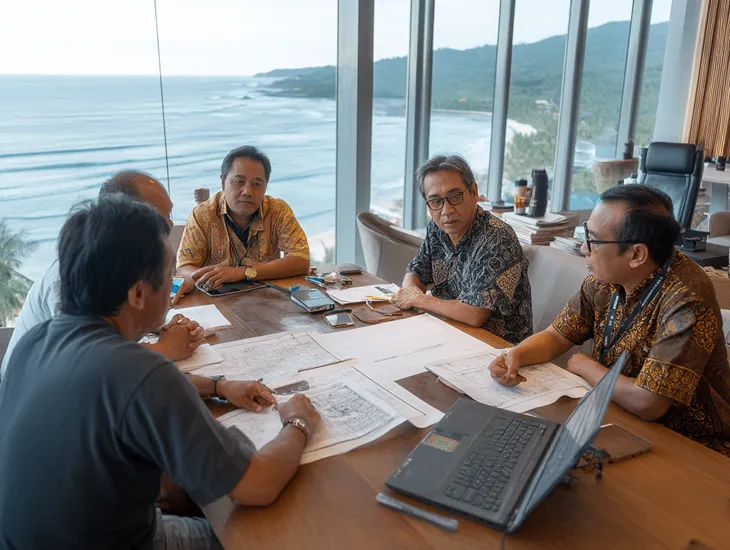
Opening an architecture firm in Bali is attractive if you love design, tropical climates, and fast-growing hospitality and villa markets, but it is also highly regulated. Indonesia treats architecture as a professional service, so the law expects you to combine a proper business vehicle with recognised professional qualifications before you sign drawings or advise clients. The national risk-based licensing system runs through the central OSS Indonesia licensing portal, which links your company data, KBLI business code, and permits into one profile.
For most foreign founders, the default vehicle is a foreign investment company (PT PMA) created under Indonesian company law with minimum paid-in capital, at least two shareholders, and standard corporate organs. That same PT PMA must be registered under the correct KBLI for architectural services and will often sit in parallel with a personal or team-level professional pathway, including membership in the Indonesian Institute of Architects. You can explore the professional dimension further through the official Ikatan Arsitek Indonesia channels, which set ethical codes, practice standards, and membership criteria.
The confusion usually starts when architects assume that being licensed overseas automatically lets them practice under their own name in Bali, or that a local โnomineeโ structure is enough to bypass foreign investment rules. In reality, Indonesian law distinguishes sharply between company ownership, construction qualifications, and individual architect registration. Some activities can be done by a design studio with foreign directors; others require an Indonesian-registered architect with a valid registration certificate attached to the project.
On top of that, Bali adds its own layer of zoning, cultural, and building rules, including height limits and requirements to incorporate Balinese architectural elements in many zones. Poorly structured firms end up blocked when they try to obtain building approvals, or they become financially dependent on a single local partner who legally controls the licence. The safest way to move is to treat opening an architecture firm in Bali as a long-term professional decision, grounded in official foreign investment rules, architect law, and local building regulations rather than shortcuts. A good starting point is to understand how Indonesia sets up foreign investment companies through the foreign company PT PMA guidelines.
Table of Contents
- Why opening an architecture firm in Bali is different ๐๏ธ
- Opening an architecture firm in Bali under PT PMA rules ๐งพ
- Opening an architecture firm in Bali with OSS, KBLI, and risk ๐ง
- Structuring an opening an architecture firm in Bali team and roles ๐ฅ
- Real Story โ opening an architecture firm in Bali with partners ๐
- Design scope, building permits, and opening an architecture firm in Bali ๐๏ธ
- Common mistakes when opening an architecture firm in Bali โ ๏ธ
- Timeline, budget, and growth plan for opening an architecture firm in Bali ๐
- FAQโs About opening an architecture firm in Bali โ
Why opening an architecture firm in Bali is different ๐๏ธ
For many designers, opening an architecture firm in Bali looks like a lifestyle upgrade: tropical villas, resort clients, and creative communities. Legally, though, Indonesia treats architecture as a regulated professional service, not just a creative activity, which means extra layers of compliance compared with a simple consulting or marketing agency. National investment rules, architect law, and Baliโs own building regulations all intersect in each project.
From a business-law perspective, foreign investors are normally expected to use a PT PMA architecture company in Bali when they want to invoice clients and employ staff. This model comes with minimum capital, reporting duties, and restrictions against operating as a micro or small enterprise, so you must target medium- to large-scale projects rather than competing directly with local freelancers. At the same time, architecture as a profession is overseen through an architect registration regime and professional associations, which exist to protect public safety and construction quality. (Indonesia Real Estate Law By Leks&Co)
Locally, Bali adds cultural and spatial planning rules that directly affect architectural design. Zoning maps distinguish between residential, tourism, commercial, and green zones, and many areas require projects to integrate Balinese architectural elements and respect maximum height limits linked to religious and landscape considerations. Ignoring these factors during concept design can send your studio into endless redesigns or even stop-work orders later in the process, damaging both finances and reputation. (wearesynergypro.com)
Opening an architecture firm in Bali under PT PMA rules ๐งพ
When opening an architecture firm in Bali as a foreigner, the normal vehicle is a PT PMA, a limited liability company with foreign shareholding established under Indonesian law and domiciled in Indonesia. This structure requires at least two shareholders, one director, and one commissioner, plus a minimum investment commitment typically in the range of IDR 10 billion in paid-up capital or planned investment for foreign-owned entities. The exact figure and structure should be confirmed with current regulations and a qualified advisor, because thresholds evolve over time. (Hukumonline)
Once the PT PMA architecture company in Bali is incorporated, it must select the correct KBLI code for its activities, such as KBLI 71102 architectural services, which classifies the business as professional, scientific, and technical services. Choosing the wrong KBLI can block your OSS RBA licensing flow or misclassify your risk level, leading to extra permits or future corrections. In some cases, a studio may add additional KBLI codes for interior design or engineering, but each extra line of business must be evaluated against foreign investment and risk rules. (OSS RBA)
At the corporate level, your PT PMA must also comply with ongoing reporting and tax obligations, including corporate income tax filings, withholding taxes on staff and consultants, and, where relevant, VAT. Using the architecture firm as a personal residency solution without proper visas or work permits is risky; founders who manage and sign for the company usually need work-authorised stay permits, not just visitor visas. Structuring your firm correctly at the PT PMA stage protects your ability to hire, sign contracts, and access larger projects in a way that aligns with Indonesian regulation ๐
Opening an architecture firm in Bali with OSS, KBLI, and risk ๐ง
In practice, opening an architecture firm in Bali means your PT PMA must be connected to the OSS RBA licensing system, Indonesiaโs online risk-based licensing platform. Once the company is incorporated, you obtain a Business Identification Number and then complete risk-based steps based on your KBLI. Architectural services generally fall into the professional services category, which may be classified as medium risk, meaning that beyond basic registration you may need additional business licences and, where applicable, technical approvals before operating fully.ย
The key is to align your KBLI 5-digit code with your actual services. If your studio focuses purely on design and documentation, the KBLI 71102 architectural services code is often appropriate. If you intend to offer design-and-build or construction management, you may enter a higher-risk category that demands construction service licences, proof of professional qualifications, and more stringent capital and experience requirements. Misrepresenting your real activity just to obtain an easier risk classification can cause serious problems if a project dispute or site inspection triggers a compliance review.ย
Because OSS RBA integrates data from multiple ministries, it also becomes the reference point when you apply for local permits or building approvals. Municipal or regency licensing teams in Bali increasingly expect your companyโs OSS data, KBLI codes, and supporting documents to be consistent with project applications. Treat the OSS dashboard as your firmโs โlegal cockpitโ: keep it updated, ensure shareholders and managers match your actual structure, and review it each time you add a new service line or region. Doing this from day one makes your architecture business more resilient and credible in the eyes of banks, investors, and public authorities.
Structuring an opening an architecture firm in Bali team and roles ๐ฅ
For opening an architecture firm in Bali, corporate licences are only half the story; you also need people with recognised professional credentials. Indonesiaโs Architect Law and related regulations expect those who call themselves architects and sign off on architectural work to hold an architect registration certificate and usually to be members of the Indonesian Institute of Architects or similar recognised professional bodies. This registration path typically involves specific education, internship periods, and professional exams.ย
Foreign architects have several options. One is to work in partnership with Indonesian-registered architects who sign drawings and act as technical directors within the PT PMA architecture company in Bali, while foreign partners focus on concept design, project management, and client relationships. Another is to explore cross-border recognition routes and local registration processes that allow foreign-trained architects to obtain Indonesian credentials, subject to experience and documentation. In both cases, clear shareholder agreements and job descriptions help avoid conflicts over who controls projects, intellectual property, and regulatory risk.
Inside the firm, you should separate strategic roles: a director responsible for compliance and finance, a technical lead overseeing design standards and building code alignment, and project leads managing day-to-day coordination. Supporting rolesโsuch as CAD/BIM technicians, visualisers, and site coordinatorsโcan be a mix of Indonesian and foreign talent. By explicitly mapping which role holds which licence or professional responsibility, you reduce the chance that a project proceeds without someone legally authorised to review and sign key documents ๐
Real Story โ opening an architecture firm in Bali with partners ๐
When Daniel, a German architect with resort experience, and Maya, an Indonesian architect from Surabaya, decided on opening an architecture firm in Bali, they assumed they just needed a local notary and a small studio space in Canggu. Their early concept was simple: Daniel would handle overseas clients and design, while Maya managed local contractors. Only when they began exploring mid-size villa projects did they realise how many layers of regulation they had to satisfy.
Their consultant explained that they needed a PT PMA because the firm would have foreign shareholding and target commercial projects above micro-enterprise level. They structured the company with Daniel and Maya as shareholders, met the minimum capital threshold, and registered the business with the KBLI 71102 architectural services code. At the same time, Maya used her existing Indonesian architect registration and professional membership to become the firmโs technical leader, while Daniel formalised his role as design director and client liaison.
The first challenge came when a client asked them to provide full design-and-build services for a boutique hotel. Rather than saying yes immediately, they mapped which parts they could deliver under their architecture KBLI and which required separate construction service licences and experienced contractors. They chose to remain a design-led architecture studio and instead partnered with a qualified construction company, avoiding the risk of operating beyond their licence. This decision reduced their margin but protected their firmโs long-term reputation and legal position.
Within two years, their practice had built a portfolio of villas and small resorts that complied with Bali zoning, height limits, and cultural design guidelines, including Balinese gateways and orientation considerations. By respecting both the business and professional rules behind opening an architecture firm in Bali, they created a studio that foreign clients trusted for legal compliance and local authorities saw as a collaborative, responsible stakeholder ๐
Design scope, building permits, and opening an architecture firm in Bali ๐๏ธ
For any company opening an architecture firm in Bali, understanding how design work connects to building permits is non-negotiable. Indonesiaโs building approval regime, which in many regions has transitioned from the old building permit (IMB) to the newer PBG (building approval) framework, links project approval to compliance with structural, safety, zoning, and cultural requirements. In Bali, that includes respecting maximum height limits, appropriate setbacks, and the obligation in many zones to incorporate recognisably Balinese architectural elements. (wearesynergypro.com)
Your architecture scope should be clearly defined in each contract. A design-only PT PMA architecture company in Bali typically handles concept, schematic, and detailed design, plus coordination with engineers and consultants. Responsibility for construction quality, contractor selection, and site safety may formally sit with a separate construction company, even if your studio provides site visits and design supervision. Blurring these boundaries in practice while contracts and licences say otherwise can expose you to disputes or liability if something goes wrong on site.
When your drawings are used to apply for building approval, authorities may look not just at the company but at the individual architect of record. This is where having an Indonesian architect with valid registration and, where necessary, an architect registration certificate becomes critical. In some cases, foreign architects collaborate with a local โarchitect of recordโ who helps align designs with local building code and temple-related considerations, particularly near sacred sites or in culturally sensitive landscapes. Taking these issues seriously at design stage greatly reduces the risk of redesigns, fines, or stop-work orders later ๐๏ธ
Common mistakes when opening an architecture firm in Bali โ ๏ธ
Many founders opening an architecture firm in Bali underestimate how tightly architecture, construction, and foreign investment rules are linked. A classic mistake is to rely on a local friend or nominee to hold all the shares and licences โon paperโ while the foreign architect informally runs the practice. This may seem convenient at first but leaves the foreign partner without legal control, vulnerable in disputes, and potentially exposed if the nominee acts against the companyโs interests or if authorities challenge the arrangement.
Another frequent error is to skip proper professional registration. Operating a PT PMA architecture company in Bali without any team member holding recognised architect registration or membership in the Indonesian Institute of Architects may work for simple interior projects, but as soon as you handle larger or safety-critical buildings, your lack of credentials can block permit applications or raise professional-liability concerns. Clients increasingly ask who will sign drawings and which professional association backs the firm.
Founders also often misjudge local building norms and zoning maps. Designing ultra-tall rooftop structures in areas with strict height caps or ignoring setback rules in narrow village roads can lead to expensive redesigns or tense discussions with neighbours and local leaders. Finally, some architects assume that small, informal projects do not require the same care as resorts; in reality, smaller sites can attract more scrutiny because they are closer to communities and religious sites. Avoiding these traps depends on early research, professional partnerships, and a willingness to adapt your design language to Baliโs context โ ๏ธ
Timeline, budget, and growth plan for opening an architecture firm in Bali ๐
From a business-planning perspective, opening an architecture firm in Bali should be mapped across three phases: setup, first projects, and scale. The setup phase covers PT PMA incorporation, OSS RBA registration, KBLI selection, tax numbers, bank accounts, and, where relevant, work-authorised stay permits for foreign partners. At the same time, your local architect partners should ensure that at least one team member is on track with architect registration and professional membership, or that a reliable external architect of record is in place.
In your budget, treat PT PMA minimum capital as a strategic investment rather than โmoney locked forever.โ Even though regulations specify minimum investment thresholds, much of that capital can support real operationsโoffice fit-out, software, staff salaries, and marketingโonce properly documented. A realistic plan also includes professional indemnity insurance where available, training on Bali zoning rules for your team, and collaboration budgets for engineers and legal consultants. Underestimating these costs is one of the fastest ways for new architecture firms to burn out after a few projects.
The growth phase comes once you have delivered a handful of compliant, on-time projects. At that point, your architecture business setup Bali 2026 can expand through service diversification (e.g., adding interior or master-planning services under suitable KBLI codes), geographic reach beyond Bali, or niche specialisation such as sustainable resorts or wellness retreats. Each growth decision should be checked against foreign investment, risk-based licensing, and professional capacity so that you do not outgrow your licences. By treating legal structure and professional standards as part of your design brief, you build a firm that is not only creative but also durable and investable ๐
FAQโs About opening an architecture firm in Bali โ
-
Can a foreign architect fully own an architecture firm in Bali?
Yes, foreign investors can normally hold shares in a PT PMA architecture company in Bali, subject to foreign investment rules, minimum capital, and sectoral restrictions. However, you still need to ensure that qualified architects, often with Indonesian registration, are involved in signing professional work.
-
Do I need an Indonesian architect partner to open an architecture firm in Bali?
While company law does not always require an Indonesian shareholder, practical compliance with architect registration, building permits, and local design norms is much easier when at least one architect on your team holds Indonesian credentials and understands local regulations. Many successful firms use a mixed Indonesianโforeign leadership model.
-
What KBLI code should I choose for an architecture studio?
Most design-led firms use a KBLI code under professional, scientific, and technical services, such as architectural services, and then add related codes only if they genuinely provide those services. Choosing the right KBLI is critical because it drives your OSS RBA risk classification and licensing path.
-
Is minimum capital really enforced for a PT PMA architecture company in Bali?
Minimum investment thresholds are an important policy tool, and authorities can review whether you are operating at the required scale. Treat the capital requirement seriously in your financial planning instead of trying to mimic a small local studio while claiming to be a foreign-investment company.
-
What permits do I need beyond company registration?
Besides incorporation, you typically need business identification and risk-based licences through OSS RBA, local registrations, and, where applicable, technical approvals linked to construction and building permits. Depending on your scope, your team members may also need professional licences or registrations.
-
How long does it take to be fully operational?
Timeframes vary, but many founders plan several months from the initial decision to fully operational status, including PT PMA setup, licensing, visa arrangements, and building a core team. Starting business development earlyโwhile the legal setup runs in parallelโhelps secure projects to support the firm once all approvals are in place.