




Pancasila Day can feel abstract if you only hear it mentioned in speeches or see it printed on posters. Yet for Indonesia in 2026, understanding Pancasila Day is essential to understanding how a country of hundreds of ethnic groups and languages holds itself together peacefully 🇮🇩. Through this holiday, the state reminds citizens that unity is not automatic; it has to be actively protected.
Behind the ceremonies, Pancasila Day 2026 is grounded in constitutional history and long political debates. You can see the official understanding of Pancasila and its role in the state through institutions such as the official BPIP portal, which was created to strengthen ideological guidance. When you link these legal roots to daily reality, the day becomes more than just another red date on the calendar.
For many Indonesians, Pancasila Day is a moment to revisit the five principles that sit at the heart of the constitution and state ideology. The wording and spirit of those principles can be traced back to early independence debates and documents, including the text of the 1945 Constitution, which define national goals and moral direction. When schools, offices, and communities read or recite them, they are not just repeating history; they are renewing a shared promise.
At the same time, Pancasila Day 2026 has to work in a fast-changing society shaped by social media, global trends, and economic pressure. Indonesia’s national portal, including pages on symbols, laws, and civic values such as those found on Indonesia’s national portal on Pancasila and national symbols, shows how the state is trying to keep these ideas relevant. This article will help you translate all of that into plain language: what Pancasila Day is, how it is celebrated, and how you can respect it in conversations, workplaces, and daily life.
Table of Contents
- What Pancasila Day 2026 means for Indonesia’s unity 🇮🇩
- How Pancasila Day 2026 grew into a modern national holiday 📅
- Core values behind Pancasila Day and Indonesia’s five principles 🧭
- Living Pancasila Day 2026 at schools, offices, and communities 🏫
- Pancasila Day 2026 for expats, investors, and foreign partners 🌏
- Real Story — How Pancasila Day 2026 reshaped one Jakarta office 📖
- Avoiding common mistakes when talking about Pancasila Day 2026 ⚠️
- Future of Pancasila Day 2026 and Indonesia’s unity agenda 🔍
- FAQ’s About Pancasila Day ❓
What Pancasila Day 2026 means for Indonesia’s unity 🇮🇩
For many citizens, Pancasila Day is the moment the country pauses to remember why independence was built on a specific set of values, not just on borders. It marks the birth of the Indonesian state ideology, a framework designed to hold together different religions, ethnicities, and political views without forcing everyone to be the same. When people talk about Pancasila Day 2026, they are really talking about this ongoing project of unity in diversity.
Pancasila is often summarised through its five principles, but the day is about more than memorising a list. It is a public reminder that the Indonesian state ideology is meant to guide decisions, from big national policies down to everyday behaviour in neighbourhoods and online spaces. When citizens and leaders treat the holiday as a checklist item, its impact is limited; when they treat it as a moment of reflection, it can shape the tone of national conversations 😊.
In 2026, Pancasila Day remains strategically important because Indonesia is facing complex challenges: digital polarisation, economic competition, and regional inequality. The holiday offers a structured opportunity to restate shared values such as belief in one God, humanity, unity, democracy, and social justice. This is why you will see speeches, flag ceremonies, and moments of silence across the archipelago on this date, even if the styles of celebration vary from place to place.
How Pancasila Day 2026 grew into a modern national holiday 📅
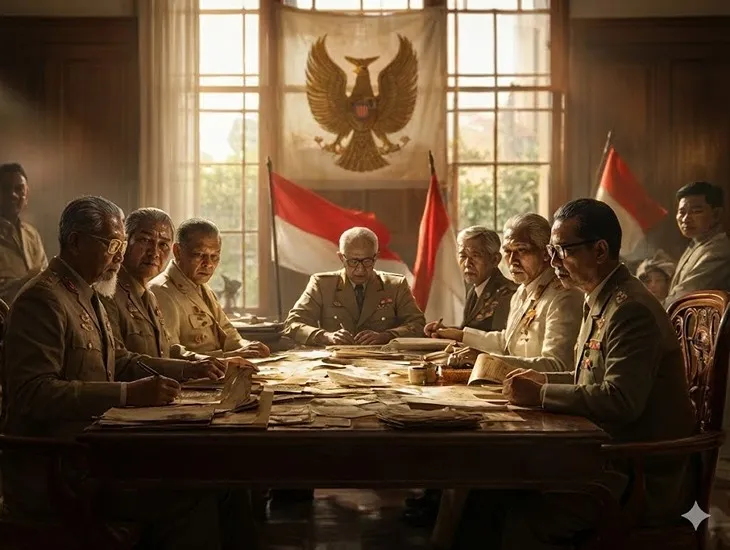
The story of Pancasila Day 2026 starts long before modern ceremonies. It goes back to the early 1940s, when Indonesia’s founding leaders were debating what kind of state they wanted to build. In key speeches and meetings, they discussed how to create a formula that would be acceptable to Muslims, Christians, Hindus, Buddhists, and indigenous belief communities while also protecting national unity against colonial powers.
Over time, these debates produced the five principles known as Pancasila, which were anchored in the preamble of the 1945 Constitution. The state gradually formalised Pancasila Day as a moment to commemorate the birth of this ideology and cement it as the philosophical basis of the republic. Through regulations and decrees, the date evolved from an internal commemoration into a widely recognised national holiday that appears on official public holiday calendars.
In the modern era, governments have used Pancasila Day 2026 to highlight themes like anti-corruption, tolerance, national resilience, and digital citizenship. This helps link historical ideals with contemporary problems such as hate speech, disinformation, and discrimination. When you see televised speeches or large flag ceremonies on this day, they are part of a long effort to keep Pancasila relevant for each new generation instead of leaving it locked inside history books 📺.

Core values behind Pancasila Day and Indonesia’s five principles 🧭
To understand Pancasila Day 2026, you need to understand the meaning behind the five principles, not only their wording. They move from belief in one God, to just and civilised humanity, to Indonesian unity, to democracy through deliberation, and finally to social justice for all. This order is intentional; it balances spiritual foundations, human rights, national identity, democratic processes, and fair distribution of welfare.
On Pancasila Day, schools, government offices, and communities often recite these principles in ceremonies. However, the deeper goal is to turn them into daily ethics. “Just and civilised humanity” encourages people to treat others fairly, including minority groups. “Unity of Indonesia” asks citizens to see themselves as part of a bigger national family, beyond regional or ethnic boundaries. “Democracy guided by wisdom” points to discussions that are calm and informed, not just loud or viral 🧠.
Another important phrase tied closely to Pancasila Day is Bhinneka Tunggal Ika – Unity in Diversity. This motto reinforces the idea that diversity is not only tolerated but valued. Together, the five principles and this national motto form a compass for policies, debates, and behaviour. When political conflicts, religious tension, or economic inequality increase, leaders often refer back to Pancasila as a common reference point that all sides should still share.
Living Pancasila Day 2026 at schools, offices, and communities 🏫
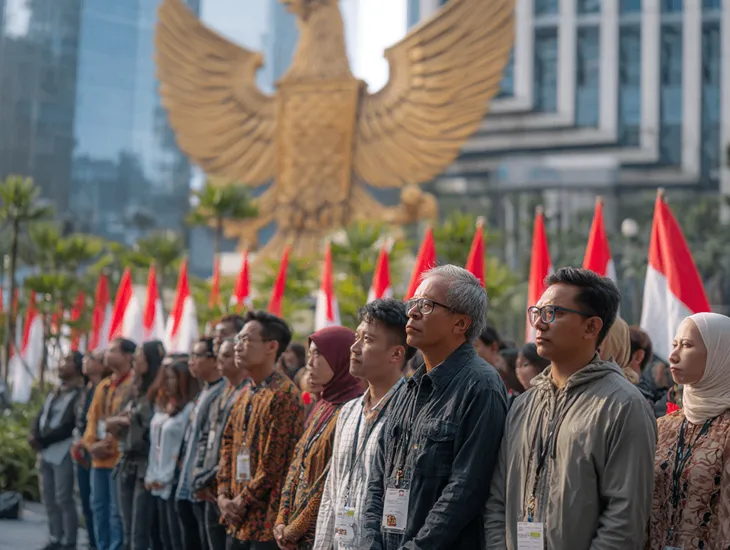
In practice, Pancasila Day 2026 is not just a day off; it is an organised set of activities across schools, offices, military units, and local communities. Many institutions hold flag ceremonies, where participants recite the Pancasila, sing the national anthem, and listen to short reflections from leaders. For younger students, teachers may use storytelling, art projects, or group discussions to bring the principles to life rather than turning them into dry memorisation.
In corporate settings, HR departments often use Pancasila Day as a chance to talk about company values and how they align with national values. Topics can include anti-discrimination policies, respectful communication across different religions, and responsible use of social media by employees. This is especially important in teams where people from different islands or cultural backgrounds work together; Pancasila gives a shared reference for what “respect” and “unity” should look like in practice.
At the community level, neighbourhoods may organise clean-up actions, charity events, or dialogues on local issues. These activities show how Pancasila Day 2026 links national ideology with everyday concerns like cleanliness, safety, and mutual support. When done well, the holiday encourages people not only to listen to speeches but also to ask, “What can we do in our street, school, or office to embody these values for the next year?” 🌱
Pancasila Day 2026 for expats, investors, and foreign partners 🌏
If you are an expat, investor, or foreign partner, Pancasila Day 2026 is an excellent opportunity to deepen your understanding of Indonesian culture and expectations. Pancasila is not just another policy; it is the official backbone of the legal system and public life. Knowing its basic ideas will help you understand why certain topics are sensitive, why unity and harmony are emphasised so strongly, and why some jokes or political comments may be seen as disrespectful.
For foreign businesses, showing respect for Pancasila Day can be as simple as acknowledging the holiday in internal communications, adjusting event schedules, and supporting company ceremonies. Executive messages that connect corporate values to the five principles – for example, linking social justice to fair HR policies – are often appreciated. This demonstrates that your organisation wants to be part of Indonesia’s long-term story, not just to operate here for profit.
In meetings and negotiations, awareness of Pancasila Day 2026 can also guide your tone. Indonesian partners may frame issues in terms of balance, harmony, and fairness, reflecting the influence of the national ideology. If you respond only with narrow commercial logic, without recognising social or national considerations, you may unintentionally weaken trust. Understanding Pancasila gives you a language for aligning business goals with national priorities 🤝.
Real Story — How Pancasila Day 2026 reshaped one Jakarta office 📖
At a mid-sized technology company in Jakarta, Pancasila Day 2026 was initially treated as just another holiday on the calendar. The HR team organised a brief online sharing session, but most employees saw it as a formality. The office had recently experienced tension after heated discussions on social media spilled into internal chats, with staff divided along regional and religious lines. Productivity slipped, and some clients quietly raised concerns about the company’s public image.
The CEO realised that simply asking people to “be professional” was not enough. In preparation for Pancasila Day, management invited an external facilitator with experience in civic education and corporate culture. Instead of long lectures, they used concrete cases based on the five principles: how to handle religious holidays fairly, how to respond to offensive memes in group chats, and how to make team decisions that consider minority voices, not just majority votes. Employees were invited to share their own experiences in small, diverse groups.
During the Pancasila Day 2026 programme, one Muslim employee and one Christian employee shared how online jokes about their respective communities made them feel unsafe. Colleagues admitted they had not seen the harm because “everyone else was laughing.” Linking these stories to the principle of “just and civilised humanity,” the facilitator helped the group design simple ground rules for respectful communication and conflict resolution. The CEO publicly endorsed these rules and tied them to performance expectations, not just personal preferences.
Over the next few months, internal complaints about offensive content dropped, and cross-team collaboration improved. The company began to highlight its Pancasila-inspired values in recruitment and external branding, attracting talent who appreciated a respectful, inclusive environment. This Pancasila Day 2026 story shows that the holiday can be more than a symbol; when approached seriously, it offers a structured moment for organisations to reset culture, rebuild trust, and align behaviour with Indonesia’s core values 📖.
Avoiding common mistakes when talking about Pancasila Day 2026 ⚠️
For all its importance, Pancasila Day 2026 is sometimes handled carelessly in conversations, especially online. One common mistake is treating Pancasila as a tool to attack others rather than as a shared standard to reflect on ourselves. When people accuse opponents of being “anti-Pancasila” over every disagreement, the concept becomes a weapon instead of a bridge. This undermines the spirit of Indonesian state ideology, which aims to keep different groups engaged in dialogue.
Another frequent error is reducing Pancasila Day to rituals without reflection. Reciting the five principles without discussing how they apply to workplace ethics, public services, or social media behaviour means the holiday remains shallow. Students and employees quickly feel that ceremonies are just obligations, not meaningful learning moments. Leaders who create space for questions and honest discussion, even if they are uncomfortable, usually build stronger connection to the values.
For foreigners, a sensitive mistake is joking about ideology, religion, or national symbols around Pancasila Day 2026. Comments that might seem harmless in another context can be interpreted as disrespecting the foundation of the state. The safer approach is to ask questions, listen more than you speak, and show that you are trying to understand. When in doubt, frame your curiosity around respect for Bhinneka Tunggal Ika and the desire to contribute positively to Indonesia’s unity rather than criticising from the outside 😊.
Future of Pancasila Day 2026 and Indonesia’s unity agenda 🔍
Looking ahead, Pancasila Day 2026 will likely remain a key tool for keeping national unity on track in a crowded information landscape. As more debates move to social media and short-video platforms, the challenge is to express Pancasila’s depth in formats that young people actually watch and share. That means creative content from schools, communities, and government that goes beyond slogans and shows real examples of tolerance, cooperation, and fairness.
For policymakers, Pancasila Day is also a reminder that laws and programmes should reflect the five principles in measurable ways. When citizens see clear links between ideology and policy outcomes – such as social justice translated into targeted assistance, or unity translated into equal access across regions – trust increases. If the gap between words and reality grows too large, even the strongest ceremonies cannot fully repair it.
For individuals, the future of Pancasila Day 2026 depends on whether the values are visible in personal choices: how we treat neighbours, how we talk about other groups, and how we handle disagreements. Unity does not mean full agreement; it means staying committed to a shared framework even when we argue. By treating Pancasila Day as a yearly checkpoint rather than a one-time event, Indonesians and their partners can keep adjusting their behaviour to match the ideals written into the nation’s founding documents 🌟.
FAQ’s About Pancasila Day ❓
-
What is Pancasila Day and when is it commemorated?
Pancasila Day is the national commemoration of Indonesia’s state ideology, Pancasila. It is observed annually as a national holiday and marked with official ceremonies, speeches, and educational activities.
-
Why does Pancasila Day 2026 matter for ordinary Indonesians?
Pancasila Day 2026 matters because it reinforces values that affect daily life: respect across religions, fair treatment, unity across regions, and a commitment to democracy and social justice. It provides a yearly moment to reflect on whether these values are truly being lived.
-
What is the connection between Pancasila Day and the five principles?
The day is dedicated to remembering and practising the five principles of Pancasila. Ceremonies, lessons, and speeches are designed to explain how belief in God, humanity, unity, democracy, and social justice should guide attitudes, policies, and behaviour.
-
How does Pancasila Day 2026 affect workplaces and schools?
Many workplaces and schools hold flag-raising ceremonies, discussions, or workshops around Pancasila Day 2026. These activities aim to connect national values with organisational culture, such as non-discrimination, teamwork, and responsible communication.
-
What should foreigners know or do on Pancasila Day?
Foreigners should recognise that Pancasila Day is a serious national occasion and avoid making jokes or critical comments about ideology or national symbols. A respectful attitude, willingness to learn, and adjustment of business or social plans to accommodate ceremonies are usually appreciated.
-
Is Pancasila Day only about politics?
No. While it is deeply linked to the state and constitution, Pancasila Day also touches social, cultural, and ethical dimensions. It invites people to think about how they treat others, how they handle disagreements, and how they contribute to a fair and united society.


