




🅿️If you’re living in Bali and craving something cooler than a beach sunset—imagine soaking in a steamy Japanese onsen surrounded by snow-capped mountains or spring blossoms 🏞️🛁. Japan’s hot springs offer the perfect balance of healing, tradition, and breathtaking views.
🅰️But if you’ve never done it before, planning an onsen trip from Bali can feel intimidating. Which ones are tattoo-friendly? Where can you wear a swimsuit? And do you need to be completely naked? 😅 Without clear answers, many travelers miss out on one of Japan’s most magical experiences.
🆂 The great news? Onsen culture is surprisingly accessible—with direct flights to Japan, foreigner-friendly baths, and even mixed-gender or private soaking options. Whether you want snowy mountains, riverside retreats, or Insta-worthy ryokans, there’s an onsen waiting for you.
🆃 “I went from Bali’s humidity to sitting in a hot spring under falling snow in Hokkaido,” said Ayu, a honeymooner from Seminyak. “It felt surreal—and totally worth the travel.”
🅴 For example, Hakone offers stunning lake views near Tokyo, Beppu has wild steamy landscapes, and Kusatsu is known for its skin-healing minerals. There are even halal-friendly ryokans and onsen with private rooms for modest travelers.
🅰️ Ready to soak your stress away in 2025? Let’s explore the best onsen destinations in Japan for Bali-based travelers—from volcanic valleys to forest hideaways.
Table of Contents
- Why Onsen Trips Are Perfect for Bali-Based Travelers 🛫
- Hakone: Tokyo’s Most Stylish & Accessible Onsen Town 🏔️
- Beppu: Japan’s Hot Spring Capital with Steam & Sand Baths 🌋
- Kusatsu: Famous for Mineral Healing Waters & Snow Soaks ❄️
- Noboribetsu: Wild Hokkaido Vibes & Volcanic Beauty 🔥
- Kinosaki: 7 Public Baths & Traditional Yukata Walks 🏮
- Real Story: “My Winter Onsen Getaway from Bali to Japan” 🧳
- Halal, Modesty & Private Onsen Tips for Indonesian Travelers 🕌
- FAQs for First-Time Onsen Visitors from Bali ❓
Why Onsen Trips Are Perfect for Bali-Based Travelers 🛫
After months of tropical heat in Bali, soaking in a steamy mountain onsen feels like the ultimate refresh. For Bali-based travelers, Japan offers not just a climate contrast—but a total cultural shift. In 6–7 hours you can land in Tokyo or Osaka and be in a hot spring by evening.
Japanese onsens offer more than warm water—they’re peaceful, natural, and rooted in centuries of wellness tradition. With low-cost flights, easy train connections, and increasing English signage, onsen trips have become more accessible to Southeast Asian travelers than ever before.
Hakone: Tokyo’s Most Stylish & Accessible Onsen Town 🏔️
Just 90 minutes from Tokyo by train, Hakone is perfect for first-time onsen travelers. It blends scenic beauty with modern comfort—Lake Ashi, Mount Fuji views, art museums, and dozens of onsen ryokans all in one place.
Many Hakone hotels offer private onsen tubs with a view, perfect for couples or modest travelers. Try Tenzan Onsen for a traditional public bath experience, or Yunessun for a more casual, swimsuit-friendly setup. The Hakone Freepass makes transport affordable for backpackers too.
Beppu: Japan’s Hot Spring Capital with Steam & Sand Baths 🌋
Located in Oita Prefecture, Beppu boasts over 2,000 hot spring sources—more than anywhere else in Japan. It’s famous for its unique onsen experiences: steam baths, mud baths, even hot sand buried soaks on the beach.
Visit the “Hells of Beppu” (Jigoku Meguri), a collection of vividly colored steaming hot springs you can tour—not soak in. For bathers, Myoban Onsen offers mountain views and mineral-rich milky waters. It’s a quirky, unforgettable destination that’s worth the flight to Kyushu.
Kusatsu: Famous for Mineral Healing Waters & Snow Soaks ❄️
Kusatsu is known for some of the most acidic and mineral-rich waters in Japan—perfect for skin conditions, fatigue, and deep relaxation. Located in Gunma Prefecture, it’s a bit more remote but extremely popular with locals.
The town is centered around the Yubatake, a steaming hot water field surrounded by ryokans. You’ll find free public foot baths and traditional yumomi (water-stirring) performances. In winter, snowflakes fall into open-air baths—a magical scene straight out of anime.
Noboribetsu: Wild Hokkaido Vibes & Volcanic Beauty 🔥
Noboribetsu in Hokkaido offers dramatic landscapes—smoking volcanoes, sulfuric trails, and mountain views surrounding mineral-rich onsens. It’s especially popular in winter, with snow-dusted forests and steaming open-air baths.
Stay in a ryokan near Jigokudani (Hell Valley) and walk through thermal vents before soaking under the stars. Some hotels offer tattoo-friendly or private baths, and Hokkaido’s local food—like crab or milk-based desserts—adds extra comfort after a long soak.
Kinosaki: 7 Public Baths & Traditional Yukata Walks 🏮
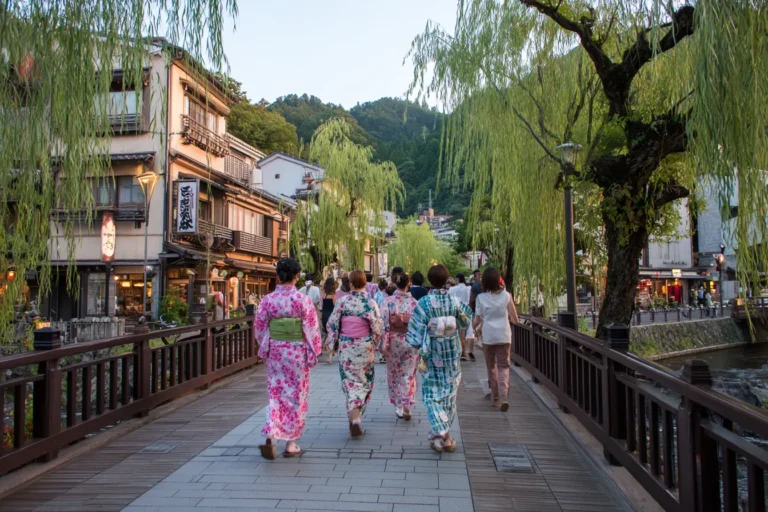
Kinosaki Onsen is all about atmosphere. Located in Hyogo Prefecture, this charming town encourages visitors to walk between 7 public bathhouses in yukata (cotton robes), clacking along in wooden geta sandals.
Each bath offers a different feature: waterfalls, steam rooms, or riverside views. Many guesthouses include a bath pass in your stay. It’s peaceful, Instagrammable, and steeped in tradition—ideal for couples or solo travelers looking for quiet cultural immersion.
Real Story: “My Winter Onsen Getaway from Bali to Japan” 🧳
“I’d never seen snow before,” said Raka, a 30-year-old creative from Bali. “So I booked a trip to Hokkaido and ended up in Noboribetsu. It was freezing outside, but the onsen was so warm I didn’t want to get out.”
Raka flew to Sapporo via Tokyo, then took a train south. “I stayed in a ryokan with a private bath on the balcony. At night, snowflakes were falling and all you could hear was the hot spring bubbling. It felt like another planet.”
Halal, Modesty & Private Onsen Tips for Indonesian Travelers 🕌
Nervous about onsen etiquette? You’re not alone. But Japan now offers private onsen rooms, family baths, and even swimsuit-friendly options in places like Hakone and Beppu. These are perfect for modest Muslim travelers or couples.
For halal concerns, check for Muslim-friendly ryokans in Hokkaido, Kyoto, and Fukuoka—they often serve halal meals on request. Bring your own towel and avoid public baths if you’re not comfortable undressing. With some planning, you can enjoy Japan’s onsen culture respectfully and fully.
FAQs for First-Time Onsen Visitors from Bali ❓
-
Do I have to be naked to enter an onsen?
In traditional public baths, yes. But many ryokans offer private onsen options where nudity is not required in front of others.
-
Are tattoos allowed?
Some onsens ban visible tattoos, but many now accept foreigners or offer tattoo covers and private baths. Always check in advance.
-
What should I bring?
A small towel, hair tie, and water bottle. Most places provide yukata and big towels for guests.
-
When is the best time to go?
Winter (Dec–Feb) for snow views, or autumn (Oct–Nov) for colorful leaves and mild weather.
-
Are there onsen suitable for Muslims?
Yes. Choose ryokans with private baths or those listed as Muslim-friendly. You can also request halal meals if arranged in advance.


