



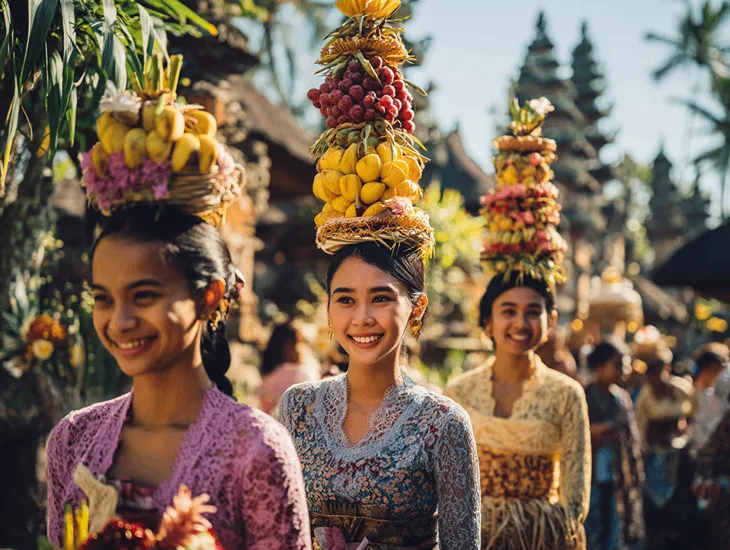

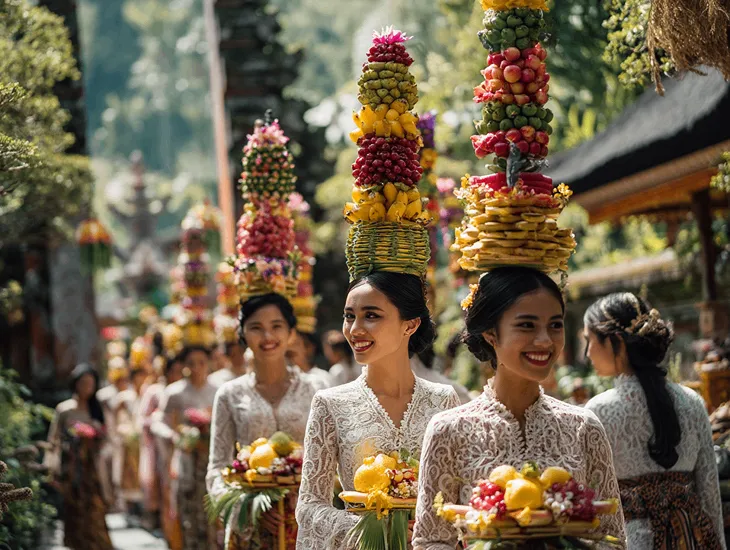
Bali is known worldwide as an island of beaches and nightlife, but for those who live here, its identity is built around a living Hindu culture that shapes the calendar, architecture, and daily routines. On Wednesday 17 June 2026, that identity becomes especially visible when Galungan Bali 2026 begins, and the whole island seems to “stand still” for prayer, family, and tradition. For many outsiders, this suddenly marked date on calendars raises questions: what exactly is being celebrated, and how will it affect real life on the island?
At its core, Galungan is a Balinese Hindu festival celebrating the victory of dharma (righteousness) over adharma (chaos) and welcoming ancestral spirits back to family compounds. You can find this meaning clearly explained by the official Bali tourism board, which emphasises unity, spirituality, and cultural heritage as the heart of the festival. For visitors, this is when you see penjor bamboo poles lining the streets, families dressed in temple clothes, and an island-wide focus on spiritual balance rather than business as usual.
To understand why Galungan Bali 2026 happens exactly on 17 June, you also need to look at how Bali itself is organised. The island’s rice terraces, temples, and village networks follow a philosophy known as Tri Hita Karana, formally recognised in the UNESCO World Heritage overview of Bali’s cultural landscape. Rather than relying only on the international calendar, Bali uses the 210-day Pawukon cycle, which determines when Galungan falls; in this cycle, the central Galungan day lands on that June 2026 Wednesday.
Most short travel blogs stop there, but if you are planning to be on the island, there is more at stake than a pretty photo of penjor. When Galungan Bali 2026 starts, schools and many offices close or reduce hours, roads get busier with family visits, and key services may operate on shortened schedules. A well-prepared guide needs to connect cultural meaning with practical planning, something this article does in a consultant-style way: we will explain the festival, how the date is calculated, what daily life looks like, and how to behave respectfully.
By the end, you should feel confident about what Galungan Bali 2026 is, why it is “celebrated” on 17 June 2026, and how to navigate the island during this sacred period. For deeper reading about the rituals and symbolism, you can also explore an in-depth cultural guide to the Galungan festival, but this article will keep everything in one place so you can plan without confusion.
Table of Contents
- What Galungan Bali 2026 Means for the Island’s Identity 🌿
- Why Galungan Bali 2026 Is Celebrated on Wednesday 17 June 📅
- Daily Rituals and Penjor Traditions During Galungan Bali 2026 🎋
- How Galungan Bali 2026 Changes Travel Plans and Traffic 🛫
- Respectful Etiquette for Visitors During Galungan Bali 2026 🙏
- Real Story — Experiencing Galungan Bali 2026 in a Village 📖
- Business, Schools, and Public Services on Galungan Bali 2026 🏢
- Planning Your Future Trips Around Galungan Bali Dates After 2026 🔍
- FAQ’s About Galungan Bali 2026 for Visitors and Locals ❓
What Galungan Bali 2026 Means for the Island’s Identity 🌿
Galungan Bali 2026 is not just another holiday; it is the moment when the island’s identity is most visible to anyone paying attention. In Balinese Hindu belief, Galungan marks the victory of dharma over adharma and the time when ancestral spirits return to visit their descendants. The island’s villages, temples, and rice fields turn into a living classroom of faith, community, and aesthetics, giving you a rare look at how religion shapes everyday life. (Bali.com)
For locals, Galungan Bali 2026 is deeply personal. Families prepare offerings in their home shrines, clean and decorate their compounds, and coordinate visits to village and regional temples. This is not a performance for tourists; it is a renewal of promises to live ethically, maintain balance, and stay connected to ancestors. The same values that underpin the famous subak irrigation system and village cooperation are fully on display, reinforcing Bali’s long-standing reputation as a “living culture” rather than an open-air museum. (UNESCO World Heritage Centre)
For visitors and foreign residents, understanding Galungan Bali 2026 is crucial because the festival explains why Bali feels different from other resort destinations. The streets may be busier with ceremonial processions, yet the overall pace of life slows as people prioritise temple time over commercial activity 🌺. When you realise that this date is about spiritual alignment, not entertainment, you can adjust your expectations and plan to observe respectfully instead of treating it as an obstacle to your itinerary.
Why Galungan Bali 2026 Is Celebrated on Wednesday 17 June 📅
Galungan Bali 2026 takes place on Wednesday 17 June 2026 because the festival does not follow the international Gregorian calendar but the Balinese Pawukon calendar, a 210-day cycle made up of overlapping week systems. In that cycle, Galungan always falls on a specific combination of day names known as Buda Kliwon Dungulan, and when mapped to the global calendar for this period, that alignment corresponds to 17 June 2026. Festival calendars and temple event listings already confirm this as the next Galungan day for Bali. (Bali.com)
For most visitors, this is confusing because they are used to fixed dates like 1 January or 25 December. Galungan Bali 2026 instead behaves like a moving spiritual anchor: every 210 days the Pawukon cycle brings another Galungan, with Kuningan occurring ten days later as the closing ceremony. Rather than thinking of 17 June as a one-off event, see it as the visible point in a repeating spiritual rhythm that has shaped Bali’s social and agricultural life for centuries 🌾. (BaliSpirit)
Practically, this means that long-term planners—expats, digital nomads, and frequent visitors—should mark 17 June 2026 and the following ten days in their calendars as a high-impact cultural period. Transport might take longer, some appointments will be rescheduled, and staff may request extended time off to return to their home villages. When you understand how the Pawukon cycle fixes Galungan Bali 2026 to that exact Wednesday, you can stop treating the date as a mysterious “Bali holiday” and start building it into your plans with respect.
Daily Rituals and Penjor Traditions During Galungan Bali 2026 🎋
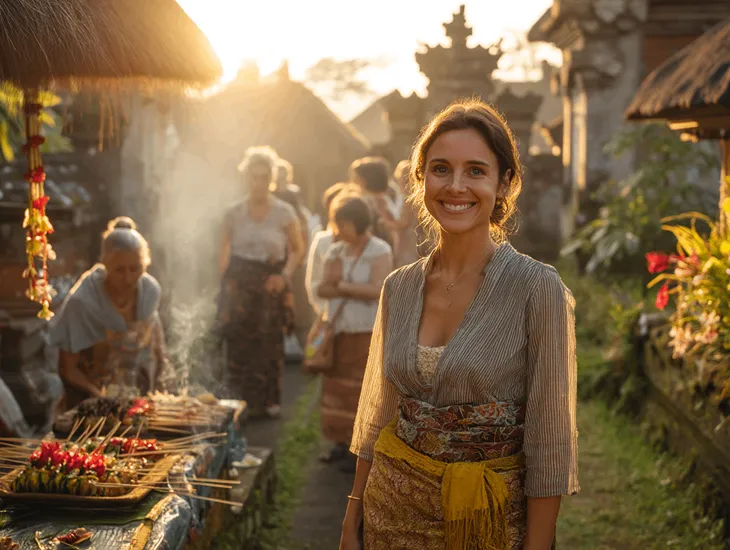
Galungan Bali 2026 is experienced not only in temples but in every street and household, and you will notice this from days before 17 June. In the lead-up to the main day, families follow a sequence of preparations—making traditional cakes, preparing meat dishes, and cleaning shrines—so that by Galungan morning, offerings are ready and everyone can focus on prayer rather than logistics. During these days, you may see markets busier than usual as people gather flowers, fruits, and ceremonial items. (Taman Safari)
The most visible symbol of Galungan Bali 2026 is the penjor: tall, gracefully curved bamboo poles decorated with coconut leaves, fruits, and symbolic ornaments, standing in front of homes and temples. They represent prosperity, the sacred mountain, and gratitude for the island’s natural abundance. When Galungan arrives, entire streets convert into corridors of penjor, and simply driving through a village becomes an unforgettable experience 🌿.
On the main Galungan day itself, families dress in traditional clothing and move through a cycle of worship—first at the family shrine, then at community temples, and sometimes at larger regional sites. Ancestral spirits are believed to visit during this period, so offerings of food, flowers, and incense are placed not only at shrines but also at entrances, roadside shrines, and workplaces. For you as a guest, Galungan Bali 2026 offers a rare window into living religious ceremonies, but it also calls for extra patience: ceremonies can temporarily block roads, and noise levels around temples may increase as gamelan music accompanies the rituals 🎶.
How Galungan Bali 2026 Changes Travel Plans and Traffic 🛫
Galungan Bali 2026 will affect your travel experience even if you never set foot in a temple. Around 17 June, many Balinese travel back to their home villages to be with extended family, which means traffic increases on main arteries connecting Denpasar, Gianyar, Tabanan, and other regencies. If you plan airport transfers, intercity trips, or time-sensitive activities during this window, allow extra buffer time, especially on the day before and the day after Galungan, when visits and social activities peak 🚗.
For visitors staying in tourist hubs like Kuta, Canggu, Ubud, or Sanur, Galungan Bali 2026 may bring both inconvenience and unexpected beauty. Some shops, cafés, and small tour operators will close or run reduced hours, particularly those run by local families, while larger hotels may operate almost normally with staff rotations. You might wake up early to the sound of drums or chanting from nearby temples, and you should expect heavier scooter flows as families move between houses and ceremonial sites.
If you are a digital nomad or long-term resident, Galungan Bali 2026 is a good time to review your schedule: avoid setting critical client calls or deadlines exactly on 17 June, and avoid planning major bureaucratic tasks like immigration visits or license renewals on that day. Even when offices are technically open, short staffing or local ceremonies can slow things down, so build flexibility into your plans and treat any extra waiting time as part of experiencing the island’s cultural rhythm.
Respectful Etiquette for Visitors During Galungan Bali 2026 🙏
Galungan Bali 2026 is first and foremost a religious period for Balinese Hindus, so your main responsibility as a guest is to avoid interference while still appreciating the atmosphere. Start with the basics: dress modestly when near temples (shoulders and knees covered) and avoid loud behaviour, alcohol, or smoking directly around religious compounds. If you are invited into a family temple or local ceremony, follow the lead of your hosts, wear a sarong and sash if offered, and never stand higher than the priest during active rituals.
Photography is another sensitive area during Galungan Bali 2026. While many people are happy to be photographed, asking permission is essential, especially during prayer or when offerings are being carried. Avoid blocking temple entrances or pathways to get a “perfect shot”, and remember that some areas inside a temple are restricted to worshippers only. A good rule is simple: if you are unsure whether something is allowed, step back and ask before acting 📸.
Finally, remember that Galungan Bali 2026 is about spiritual balance and family unity, not just spectacle. Refrain from complaining publicly if your favourite café is closed or if staff ask to finish early to attend ceremonies. Instead, plan ahead: stock up on essentials the day before, shift activities to quieter times, and use the festival period to learn more about Balinese values like harmony, respect, and gratitude. This attitude not only avoids friction but also deepens your connection to the island far beyond typical sightseeing.
Real Story — Experiencing Galungan Bali 2026 in a Village 📖
When Galungan Bali 2026 approached, Emma, a remote worker from Canada, had already been living in a kos room in Denpasar for a few months. She kept seeing penjor poles appear along the streets and noticed her Balinese colleagues talking excitedly about going “home to the village”. Curious but cautious, she accepted an invitation from a coworker, Wayan, to join his family in a small village near Tabanan for the main Galungan day. She quietly rescheduled client calls and moved a key project deadline so the date would be free.
Arriving in the village on the afternoon before Galungan Bali 2026, she saw preparations in full swing: aunties arranging flower offerings, uncles roasting meat for lawar and satay, teenagers hanging decorations from the penjor outside the family gate. Wayan’s mother handed Emma a sarong and kebaya blouse, carefully explaining how to wear them and why dressing properly shows respect to ancestors and the gods. Emma realised that what she had thought of as “colourful Bali culture” online was, here, a serious family responsibility and spiritual duty.
On the morning of Galungan Bali 2026, they woke before sunrise. The family compound filled with incense and soft chanting as each shrine received offerings. Emma was guided on where to sit, when to press her palms together, and when to follow the family to the village temple. She kept her phone in her bag except for a few moments when Wayan said photos were fine. Later that afternoon, between temple visits and shared meals, she asked about the Pawukon calendar and why 17 June had been chosen. The family explained that for them the date was less important than the cycle itself; what mattered was keeping the balance between good and evil in their own lives.
By the time Emma returned to Denpasar, she understood that Galungan Bali 2026 was not a show staged for visitors but a living system that shaped how people planned work, education, and relationships. Back at her coworking space, she began encouraging other foreigners to check festival dates before scheduling big events and to leave space in June for their local colleagues’ obligations. The experience changed her from a casual observer into someone who actively supports Bali’s cultural rhythm—simply by planning around it and respecting its meaning 🌺.
Business, Schools, and Public Services on Galungan Bali 2026 🏢
Galungan Bali 2026 will have visible effects on businesses and public services that you should anticipate. Many schools schedule holidays around the Galungan–Kuningan period, giving children time to join family ceremonies and village activities. Government offices, banks, and some private companies may close on the central Galungan day or operate with limited staff, especially in districts where commuting long distances would make it hard for employees to participate fully in rituals. Even in more urbanised areas, productivity is intentionally reduced to honour the sacred time. (BaliSpirit)
Small, family-run businesses—laundries, warungs, homestays, drivers—are particularly affected during Galungan Bali 2026. Owners may close for one or more days around 17 June, and drivers might prioritise family travel over tourist trips. Larger hotels, beach clubs, and malls usually remain open, but you may notice more local staff taking leave or swapping shifts. If you rely on local service providers, it is wise to confirm availability a week or two in advance and be prepared for last-minute changes.
For professionals running Bali-based operations—whether hospitality, consulting, or creative agencies—Galungan Bali 2026 is a strategic planning milestone. Use it to adjust staff rosters, pause non-urgent projects, and communicate with clients that response times may be slower during this window. Treating Galungan as a fixed cultural “anchor date” in your annual planning not only avoids stress but also signals respect to employees and partners who see this period as central to their identity and obligations.
Planning Your Future Trips Around Galungan Bali Dates After 2026 🔍
Galungan Bali 2026 is one point in an ongoing pattern, and learning from it helps you plan future trips more intelligently. Because the festival follows the Pawukon calendar rather than fixed Gregorian dates, upcoming Galungan days will continue to shift through different months and seasons. If you fall in love with the atmosphere around 17 June 2026, you might want to return for future cycles, or alternatively choose to visit outside the festival window if you prefer quieter roads and fully operational services. (Bali Local Guide)
For travellers, one useful habit is to check updated Bali festival calendars whenever you plan a trip longer than a week. Mark Galungan and Kuningan dates, then decide whether you want to be on the island during that time or avoid it. If you are bringing family, Galungan offers an incredible educational opportunity for children to see living religion and culture in action. If you are coming mainly for surfing or remote work, you might choose dates that avoid the peak of domestic travel and village obligations. Both approaches are valid as long as you consciously account for the festival’s impact.
For long-term residents or investors, mapping future Galungan dates into your project timelines is essential. Whether you are launching a new villa, scheduling team training, or planning regulatory submissions, avoiding the Galungan window reduces friction and shows maturity in dealing with Bali’s unique cultural environment. Galungan Bali 2026 can thus be your starting point for building a culturally aligned calendar that respects both your goals and the island’s spiritual rhythm.
FAQ’s About Galungan Bali 2026 for Visitors and Locals ❓
-
What exactly is Galungan Bali 2026?
Galungan Bali 2026 is the upcoming cycle of the Balinese Hindu festival that marks the victory of dharma over adharma and welcomes ancestral spirits back to family homes. It begins on Wednesday 17 June 2026 and continues with related ceremonies for ten days until Kuningan.
-
Why does Galungan Bali 2026 fall on 17 June instead of a fixed date every year?
The date is determined by the Balinese Pawukon calendar, a 210-day cycle with its own week structure. Galungan is always celebrated on the combination known as Buda Kliwon Dungulan, which in this cycle aligns with 17 June 2026 when converted to the international calendar.
-
Will shops and restaurants be open during Galungan Bali 2026?
Many larger hotels, restaurants, and malls will remain open, but smaller family-run businesses may close for one or more days around 17 June. It is smart to check opening hours in advance and avoid relying on last-minute bookings for local services.
-
Is it appropriate for tourists to visit temples on Galungan day?
Yes, visitors are generally welcome to observe Galungan Bali 2026 at temples, provided they follow etiquette: wear a sarong and sash, cover shoulders, remain quiet during prayers, and avoid standing in front of worshippers or entering restricted inner sanctums.
-
How should I plan transport around Galungan Bali 2026?
Expect heavier traffic before and after 17 June as families travel between villages for ceremonies and visits. Allow extra time for airport transfers, intercity trips, and tours, and consider scheduling long drives away from the busiest morning and late-afternoon windows.
-
Does Galungan Bali 2026 affect immigration, banking, or government services?
Some government offices and banks may reduce hours or be more lightly staffed on Galungan day and during the surrounding period. If you need important documents processed, schedule appointments outside the festival window or complete them at least a week earlier to avoid delays.


